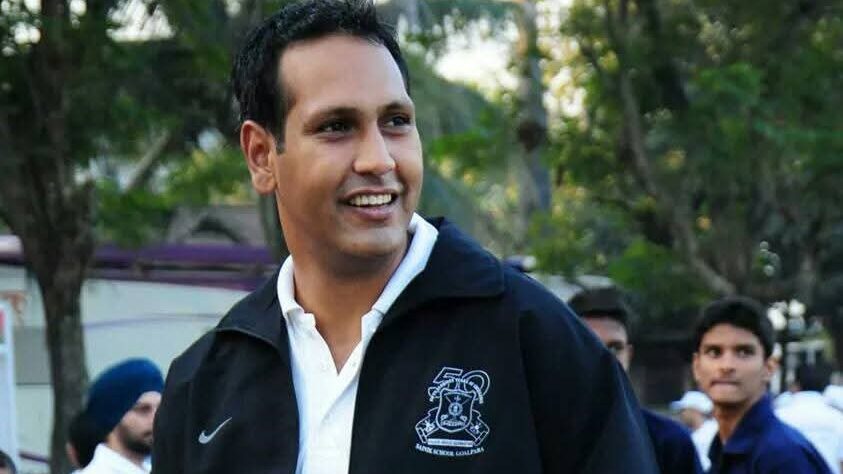


By Prarthana Hazarika
Aichi-Nagoya: India’s straight-set defeat to Pakistan in the men’s volleyball quarterfinal at the Asian Games 2026 has once again brought the spotlight on the gap between the two sides, but former India captain Abhijeet Bhattacharya believes Thursday’s result needs to be viewed in the context of Pakistan’s long-term planning.
Speaking exclusively to Meghalaya Sports, Bhattacharya said Pakistan’s stronger world ranking and team combination reflected the benefits of sustained preparation, while stressing that India had the ability to challenge their opponents.
“Pakistan is definitely a very well-combined team with a better world ranking than the Indian team. Today’s match result is the outcome of their long-term planning,” Bhattacharya told Meghalaya Sports.
India, who had shown encouraging form in the group stage, were beaten 0-3 by Pakistan in the quarterfinal. The Indian side had entered the knockout phase unbeaten, including a notable comeback victory over Qatar.
For Bhattacharya, however, the defeat was not simply a question of India lacking the technical or tactical resources to compete.
“Although our team was equipped to overcome their challenges in all areas, it was one of those days when the combination did not work well,” he said.
The second set proved particularly costly for India. Having established a 19-16 lead, India were unable to convert the advantage as Pakistan fought back to take the set 25-23. Pakistan then carried the momentum into the third set to complete a 25-18, 25-19, 25-23 victory.
The former India captain’s assessment also points towards a larger question for Indian volleyball: whether short-term tournament preparation is enough to bridge the gap against teams that have invested consistently in building their combinations and competitive structure.
Pakistan’s performance demonstrated the value of a settled unit, particularly under pressure in the crucial phases of the match. India, meanwhile, will have to examine how it can turn its considerable individual and team potential into consistency at the highest level.
For Indian volleyball, the Asian Games campaign therefore ends with both disappointment and questions for the future.
The group-stage performances showed the team’s ability to compete, but the quarterfinal defeat underlined the importance of long-term planning, team combination and delivering under pressure when the margins are smallest.
Bhattacharya’s assessment is significant: India had the tools to challenge Pakistan, but on the day, the combination did not click.