

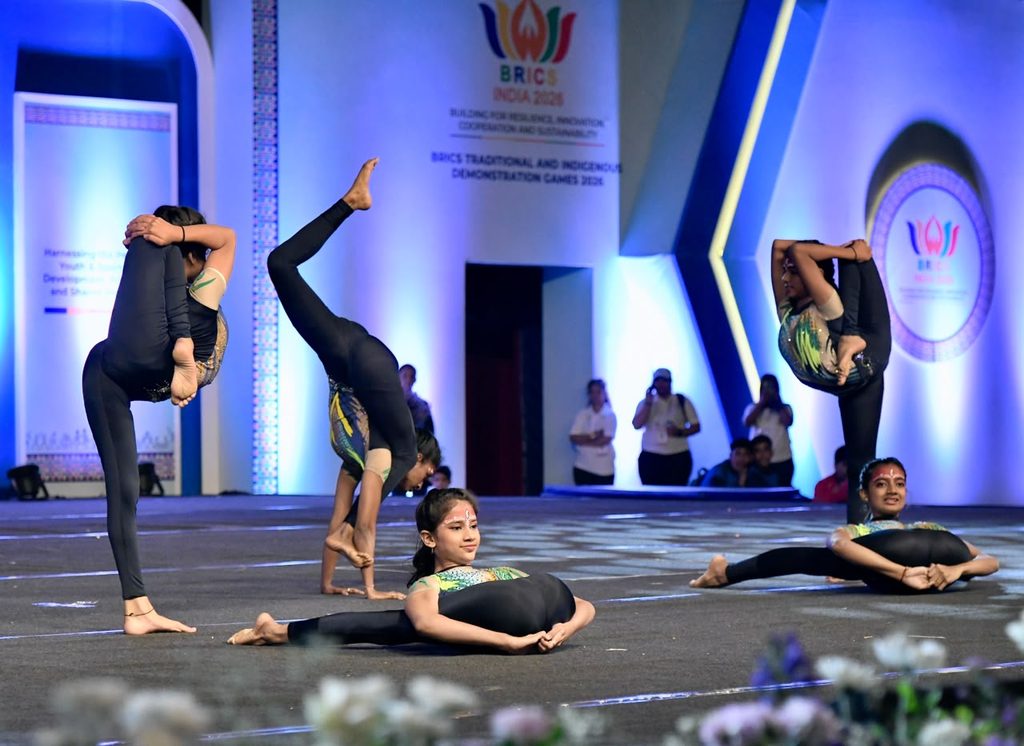
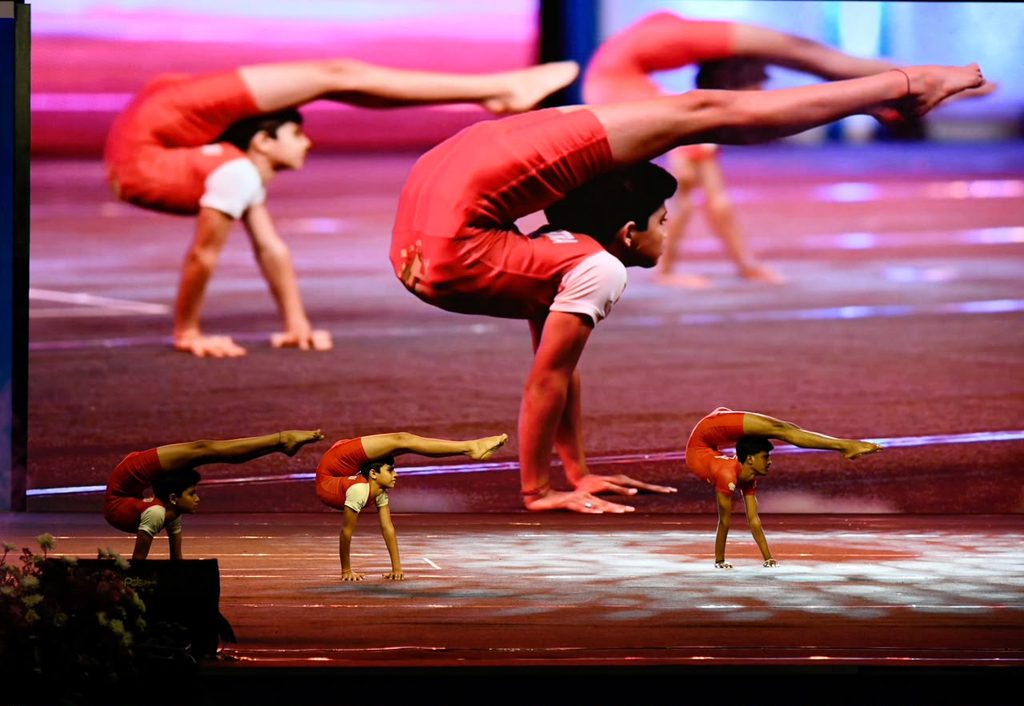
Ahmedabad, October 13: India’s yogasana captivated international delegations at the inaugural BRICS Traditional and Indigenous Demonstration Games 2026 in Ahmedabad, with representatives from China and South Africa expressing their admiration for the discipline and its growing appeal.
The one-day event at the Veer Savarkar Sports Complex brought together close to 160 participants from 10 nations, showcasing traditional sports and indigenous practices that reflected the diverse sporting cultures of the participating countries.
From China’s energetic wushu demonstration and India’s spectacular mallakhamb display to Kazakhstan’s strategic togyzkumalak and Brazil’s Brazilian Jiu-Jitsu, the event celebrated sporting traditions while fostering friendship and cultural exchange.
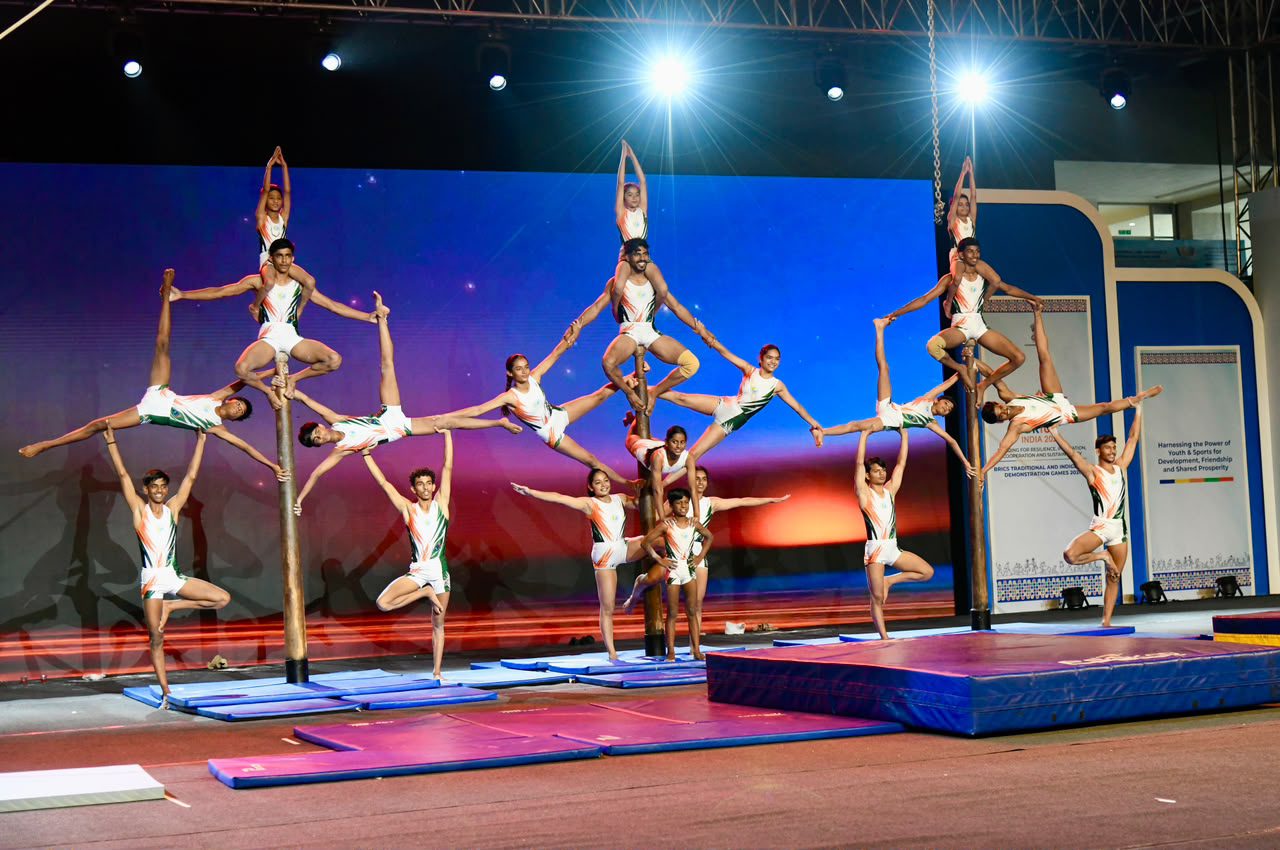
For India, yogasana was among the key attractions, alongside mallakhamb and kalaripayattu.
“Yoga is one of the activities in South Africa that people use to detox, relieve stress and improve movement and flexibility. We embrace it, and we love it,” Philasande Macwili, Chef de Mission of South Africa, told SAI Media.
“It demands a lot from your body. Still, those South Africans who enjoy it practise it every day,” he added.
The appreciation comes months after Ahmedabad hosted the first-ever World Yogasana Championships in June 2026, featuring 522 athletes from 79 nations. The event underlined the growing international reach of yogasana as a competitive sporting discipline.
India’s performance at the championships was particularly impressive, with the hosts winning 114 medals, including 102 golds. A total of 31 nations secured at least one medal, while 10 countries won gold, reflecting the sport’s expanding international participation.
China’s delegation was equally impressed by the discipline and the young practitioners showcasing its demanding movements.
“Today we looked and learned so much about Yoga. Even yesterday during practice, we saw young children practising the amazing movements. We want to learn so much more about it,” said Yi Liu, Chef de Mission of China.
The crowd of around 3,000 at the Veer Savarkar Sports Complex also responded enthusiastically to India’s mallakhamb contingent, whose high-intensity performance followed a synchronised demonstration of rhythmic yogasana.
Beyond the performances, the Games offered opportunities for athletes to exchange knowledge and learn from one another. In one such moment, a Chinese wushu athlete was seen explaining the finer techniques of the discipline to athletes from the Sports Authority of India’s National Centre of Excellence at Narayanpura.
The spirit of friendship extended to the delegations’ experience outside the competition arena.
Liu said the Chinese contingent had received an exceptionally warm welcome in India, recalling that a dance group greeted them at the airport despite their midnight arrival.
The delegation also enjoyed the food, hospitality and arrangements during its stay, with Liu specifically mentioning dosa as one of the local dishes they had tried.
Russia’s delegation echoed the sentiment, highlighting the camaraderie among the participating nations.
“Thanks to everybody for inviting us to such a great event,” said Zlata Yakovleva, Head of Delegation of Russia, to SAI Media.
“It was unbelievable. The hospitality of the Indian side is awesome. We really enjoyed the hotel, all the venues of the event and how everything looked. I guess the biggest and most favourite part for me is the friendship among the BRICS countries. We really enjoy participating together in such events,” she added.
India fielded the largest contingent with 50 participants, followed by China with 30, Iran with 22 and South Africa with 14.
The participating nations showcased a wide range of traditional and indigenous disciplines. Belarus featured gorodki; Bolivia presented lucha de cholitas and tinku; Brazil showcased Brazilian Jiu-Jitsu and capoeira; while China demonstrated lion dance, wushu and health qigong.
Iran presented zoorkhaneh, haft sang and ghanieh; Kazakhstan showcased asyk atu, togyzkumalak and qazaq kuresi; Russia featured sambo and gorodki; South Africa demonstrated kgati and iintonga; and the UAE presented altabbah.
India’s showcase included mallakhamb, yogasana and kalaripayattu.
As Ahmedabad looks ahead to hosting the 2030 Commonwealth Games, the inaugural BRICS Traditional and Indigenous Demonstration Games offered a platform to present India’s sporting heritage to an international audience. More importantly, the event demonstrated how traditional disciplines can transcend borders, encouraging cultural understanding, knowledge-sharing and friendship through sport.