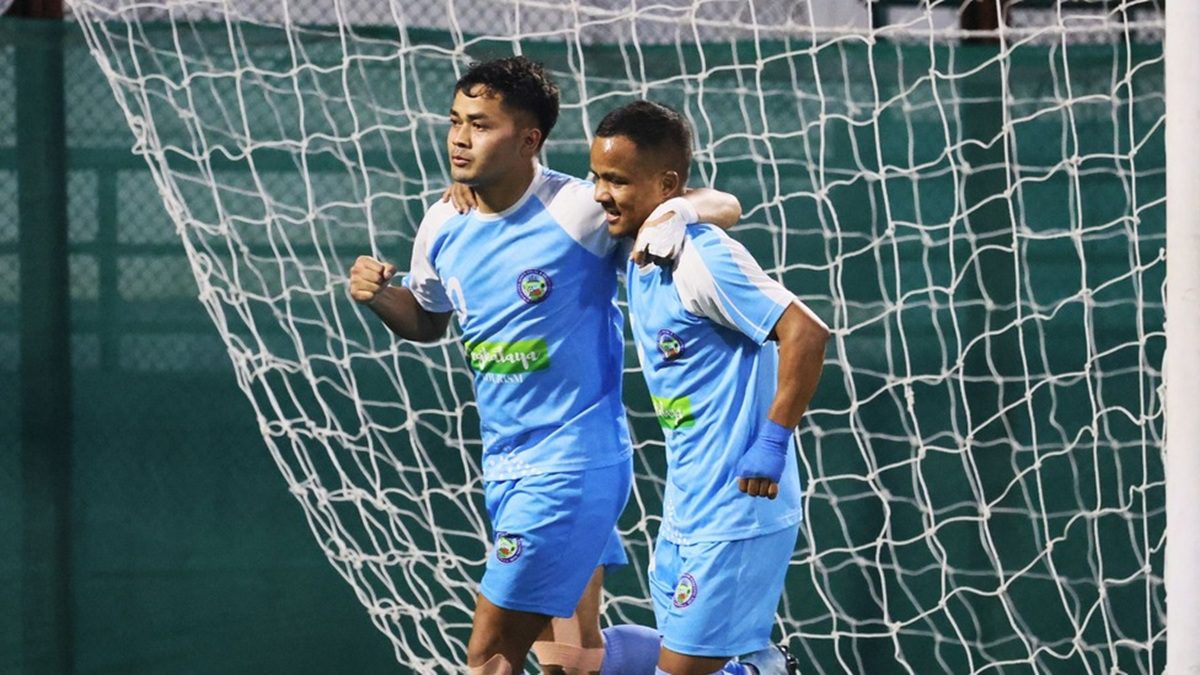


Shillong, Aug 6: For most footballers, leaving an established club to join a team still climbing through the ranks of Meghalaya football would seem a risky move. But for Hardy Cliff Nongbri, it was an opportunity to help build something that could shape the future of the game in the state.
The 29-year-old mid-fielder, who once captained Shillong Lajong FC in the I-League, is now leading Nongkseh Sports Social & Cultural Club through one of the most remarkable chapters in its history. Although Nongkseh opened their maiden 135th IndianOil Durand Cup campaign with a 2-0 defeat to Shillong Lajong on July 31, the result did little to overshadow the significance of the occasion.
For the first time, the community-based club from Nongkseh was competing in not just India’s but Asia’s oldest football tournament, marking an important milestone in the club’s rapid rise from the lower divisions of Meghalaya football to the national stage in just over a season.
For Nongbri, the match was particularly symbolic. He walked onto the pitch against the very club where he had developed as a player and captain, but this time carrying the hopes of a new project. “My main target is to take Nongkseh higher,” Nongbri said. “Step by step, we want to reach I-League 3, then I-League 2, and one day the ISL. That’s my dream.”
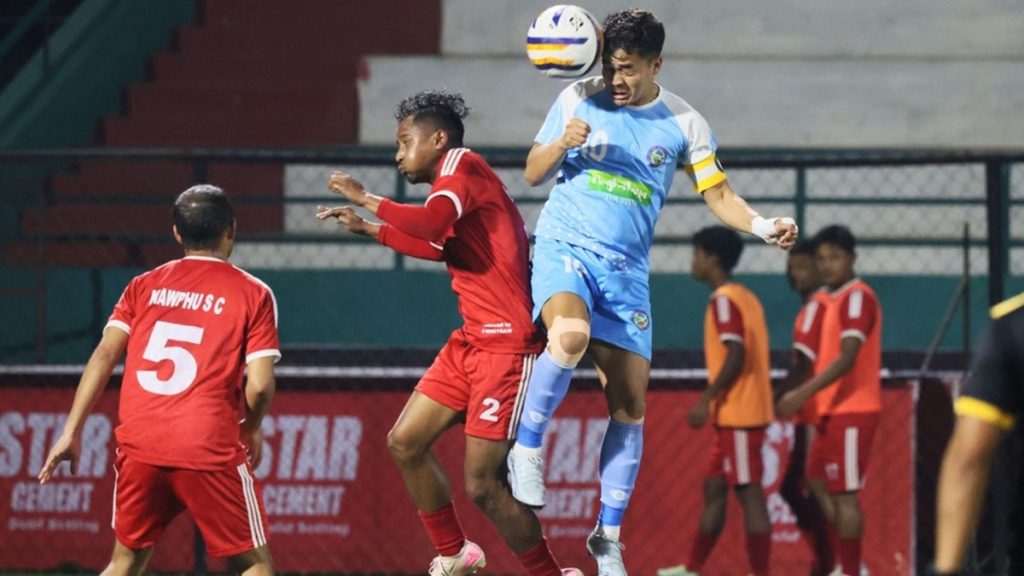
His football journey began like that of many youngsters across Meghalaya.
“I started playing football when I was around seven or eight years old with my friends in our village,” he recalled. “We didn’t have professional facilities or expensive equipment, but our passion for the game was enough. Playing on those rough grounds taught me discipline, teamwork and the importance of never giving up.”
Those early years eventually led him to represent Meghalaya at the Under-13 level in 2009 after impressing in a district tournament. The selection earned him a place at the Sports Authority of India Training Centre in Shillong before he joined Shillong Lajong’s youth academy in 2011.
Over the next decade, Nongbri established himself as one of Meghalaya’s dependable mid-fielder, earning promotion to Shillong Lajong’s senior side and eventually captaining the club. Along the way, experienced players such as Aiborlang Khongjee and Rokus Lamare played an important role in shaping his development.
“I admired players like Aiborlang Khongjee and Rokus Lamare. Watching the way they trained and played inspired me a lot,” he said.
With an established career already behind him, a move to Nongkseh surprised many observers. But Nongbri insists the decision was never about leaving a bigger club. It was about believing in a long-term vision.
“The president shared his vision with me,” he said. “He didn’t want Nongkseh to remain just another club playing in Shillong. He wanted to build the club step by step – from I-League 3 to I-League 2 and hopefully one day the ISL. That vision matched mine.”
Before making the switch ahead of the 2025 season, Nongbri discussed the decision with his family, who supported the move. He also found confidence in the ambition of club president Daniel M. Thangkhiew, believing Nongkseh represented a project worth investing in rather than simply another football club.
That belief has already produced impressive results. Within a season, Nongkseh lifted four major trophies, including the 5th Meghalaya State League, the SSA Champions Cup and the prestigious All India Chief Minister’s Gold Cup in Sikkim. Victories over clubs such as NEROCA FC, Red Panda FC and BSF Jalandhar further reinforced the team’s belief that they could compete beyond the state level.
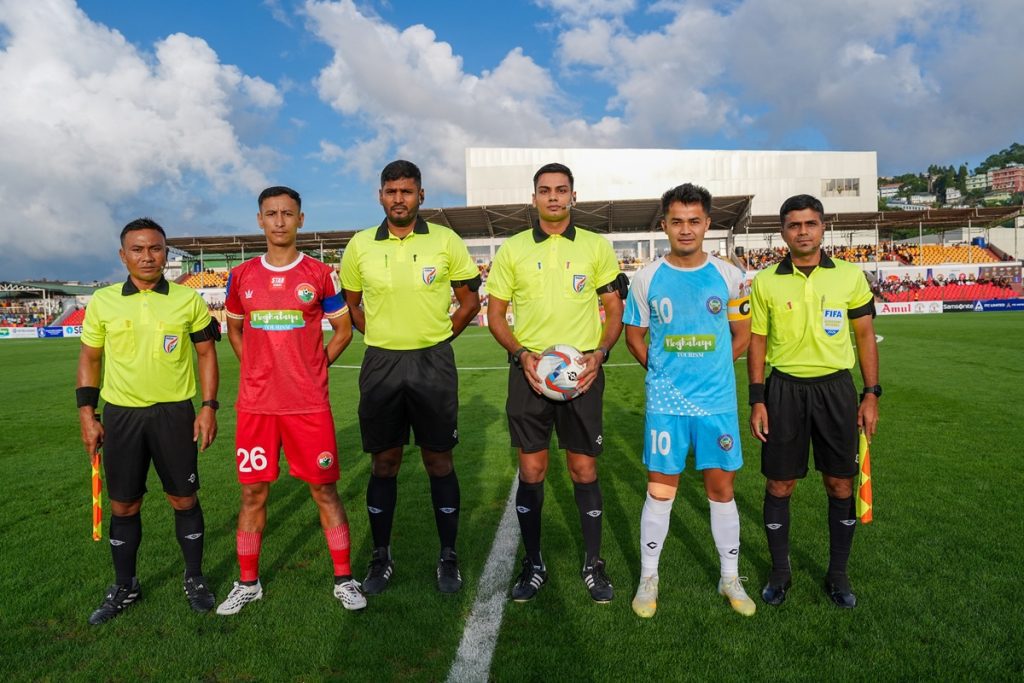
Among those achievements, one stands above the rest for Nongbri. “Winning the Chief Minister’s Gold Cup means the most to me,” he said adding “it is a prestigious tournament, and winning it with Nongkseh made it very special.”
He believes the club’s rapid progress has been built less on individual talent and more on collective belief. He also emphasized that while they have very good players and a very good coach, each tournament gave them something even bigger – confidence and belief. “Every tournament gave us confidence. Beating teams like NEROCA showed us that we deserved to compete at this level. That’s what motivated us,” he said.
That confidence eventually earned Nongkseh an invitation to compete in the 135th IndianOil Durand Cup, placing the club alongside some of the country’s biggest football institutions.
Although Nongbri has previously featured in the competition with Shillong Lajong, captaining Nongkseh carries a different emotional significance. “The Durand Cup is a prestigious tournament,” he said. “I’m very happy that Nongkseh has been invited to be part of it. Football fans across Shillong and the villages are excited because the tournament is coming here again, and we’re proud to represent them,” he added.
At the same time, for Nongbri, representing Nongkseh extends beyond football. “It’s not just a community we represent,” he said. “We are a family that fights for everything – for the fans and for Nongkseh. Every player gives 100 per cent for this club.”
That sense of identity has become one of the defining features of Nongkseh’s rise. What was once primarily known as a community club has evolved into one of Meghalaya’s fastest-growing football institutions, driven by a vision that stretches well beyond its first appearance in the Durand Cup.
While the defeat to Shillong Lajong delayed the club’s search for its first points in the competition, it has done little to alter its long-term ambitions.
For Nongbri, the focus remains firmly on the future.
His move from one of Meghalaya’s most successful clubs to one of its newest football success stories was never about choosing the easier path. It was about helping build a club from the ground up. As Nongkseh continues its maiden Durand Cup campaign, its captain remains convinced that the club’s journey to the national stage is only the beginning.
Note: This article is based on a press release issued by the Durand Football Tournament Society and has been substantially edited by the Meghalaya Sports.