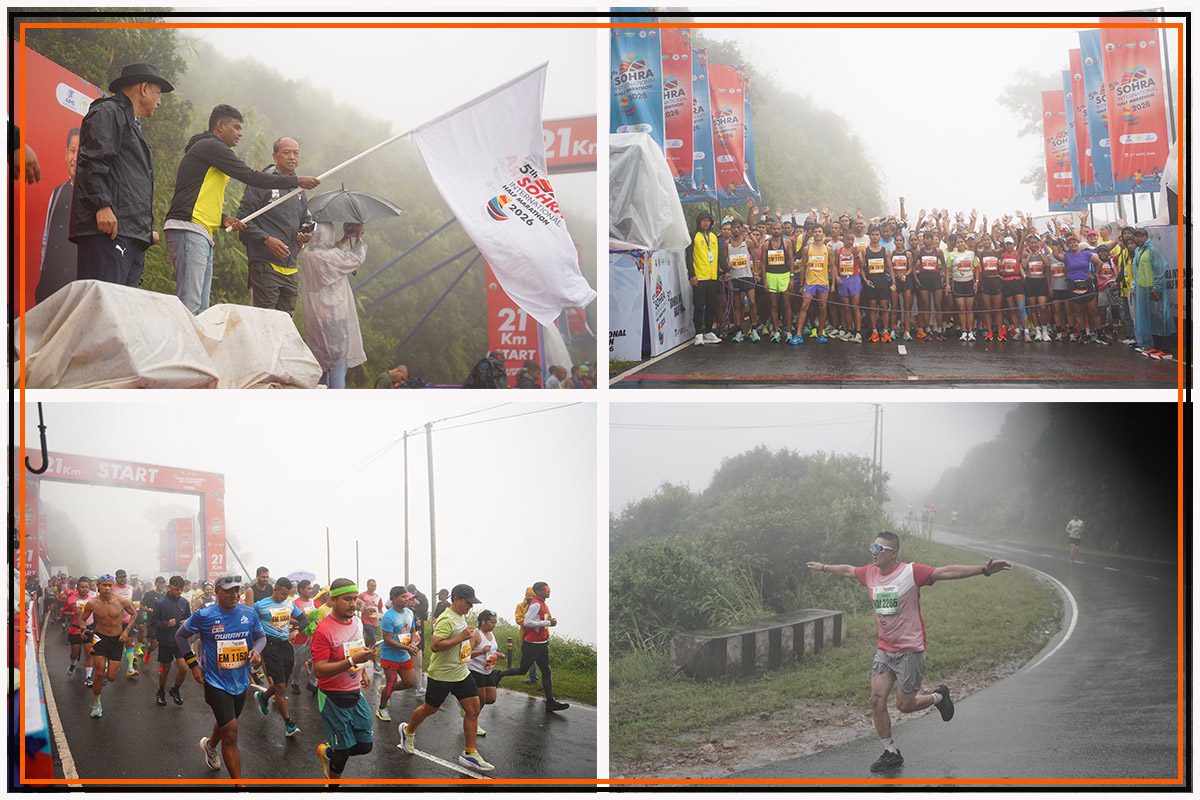


Shillong, Sept 4: The fifth edition of the Sohra International Half Marathon witnessed a record turnout on Friday, with 11,672 registered runners taking part across various categories as Meghalaya continued to strengthen its position as an emerging destination for competitive sport and fitness.
Organised by the Meghalaya State Olympics Association (MSOA) in collaboration with the Directorate of Sports and Youth Affairs, Government of Meghalaya, and the Meghalaya Athletics Association, the event was officially recognised by the Athletics Federation of India (AFI) and certified by the Association of International Marathons and Distance Races (AIMS).
The 2026 edition brought together runners from nearly 24 states across India, besides international participants, underlining the growing national and international profile of the Sohra race.
The event has grown substantially since its inaugural edition, when around 750 runners participated.
Addressing the gathering, Meghalaya Sports and Youth Affairs Minister Wailadmiki Shylla highlighted the scale of the growth, noting that the race had expanded from its modest beginning to nearly 12,000 participants in just a few editions.
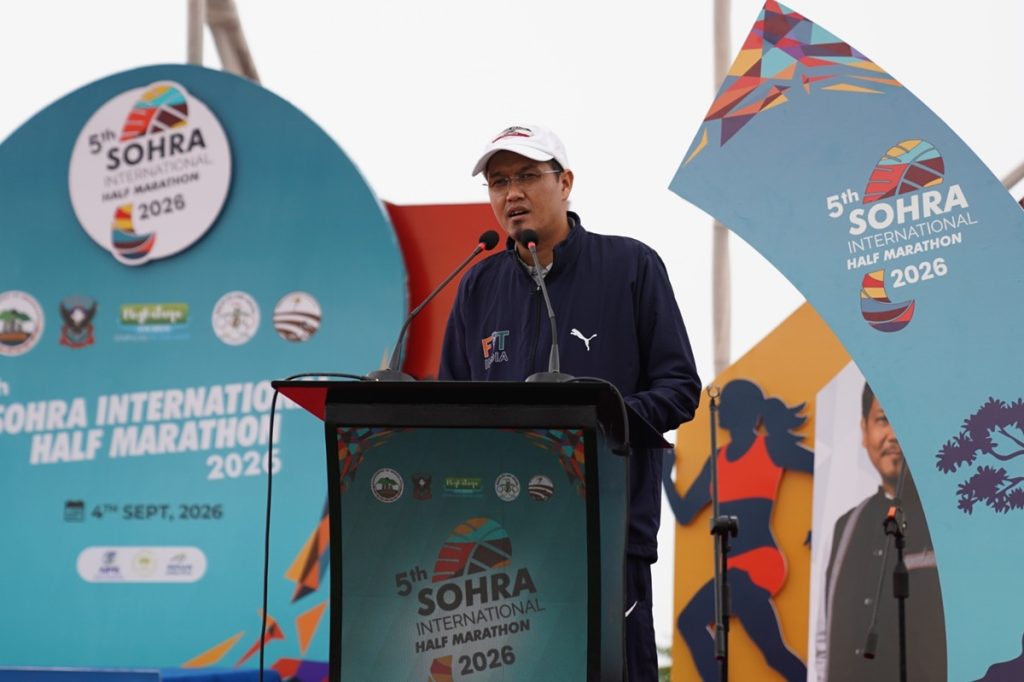
Shylla said registrations had been capped at 11,672 to ensure that adequate logistical arrangements, facilities and support could be provided to participants. Without the cap, he said, demand could have crossed 20,000 registrations.
Beyond its sporting significance, the minister underlined the wider economic benefits generated by the marathon. The influx of runners and visitors provides business opportunities for local homestays, transport operators and farmers, while also helping establish Sohra as a destination for sports tourism alongside its longstanding reputation for natural attractions, including its waterfalls and heavy rainfall.
Shylla also emphasised the importance of physical fitness and mental wellbeing, encouraging participants to return home as ambassadors of Meghalaya and its hospitality.
With Meghalaya set to host the 39th National Games next year, the minister reaffirmed the state government’s commitment to developing its sporting ecosystem and preparing athletes and infrastructure for the national event.
Suki Singh hails Meghalaya’s sporting transformation
The event also featured the presence of ultramarathon runner Sukant “Suki” Singh, described as the first Indian to complete three 200-mile ultramarathons.
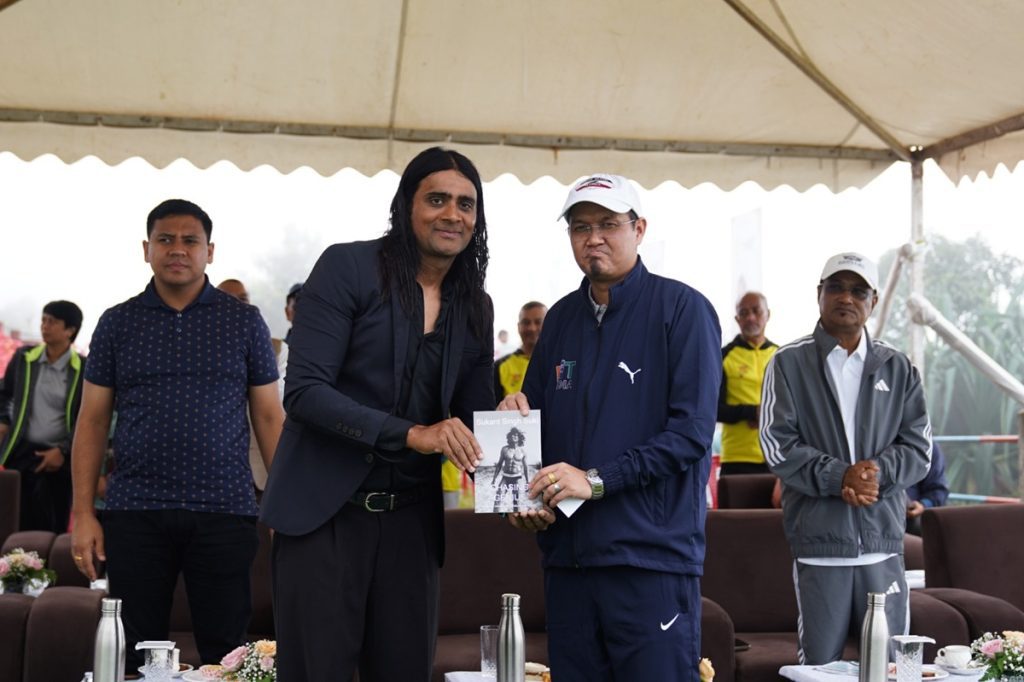
Singh praised Meghalaya’s sporting infrastructure and natural environment, describing the state as the “future sporting capital of India”.
He credited the state government, including Chief Minister Conrad K. Sangma, with helping transform Meghalaya’s sporting landscape and encouraging young people to take up sport.
Singh said the availability of modern sporting facilities, combined with the government’s focus on youth development and community participation, had created an environment capable of producing athletes and hosting major sporting events.
Verma, Lambkane claim elite 21km crowns
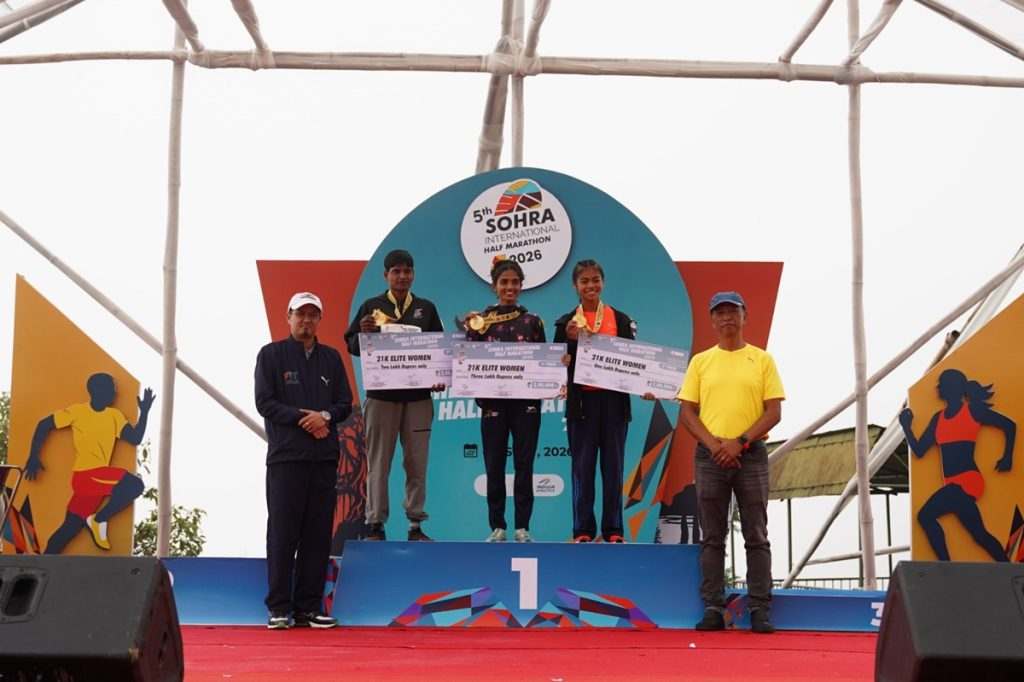
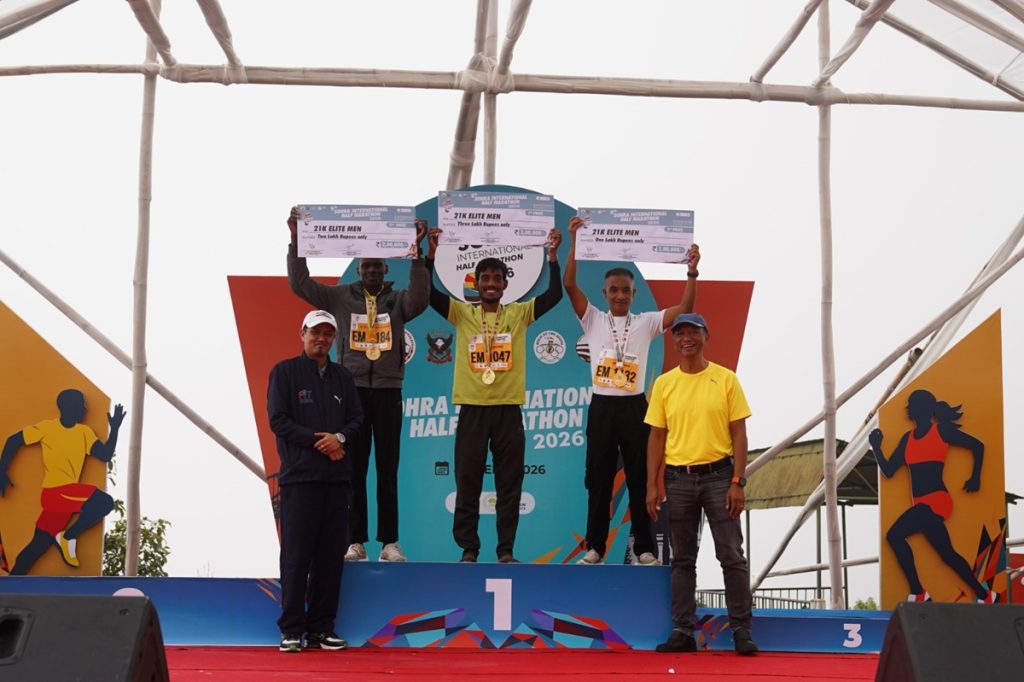
The competitive highlight of the day was the elite 21km race, where Satish Kumar Verma emerged victorious in the men’s category with a time of 1:03:04.
Tejaswini Narendra Lambkane won the elite women’s race, clocking 1:15:20.
The Meghalaya Open 21km races also produced strong performances. Wolbetstar Ramsiej won the men’s category in 1:03:26, while Marqueenless Ramsiej took the women’s title in 1:23:55.
The 10km races saw Wankyrmen L. Mawphlang win the men’s 18–39 years category in 28:28, with Daplin Wahlang taking the corresponding women’s category in 37:20.
In the 40–54 years category, Bharat Bhushan won the men’s race in 29:14, while Mena Mary Wahlang topped the women’s event in 41:55.
The 55 years and above category saw Swonding Mawlong win the men’s race in 38:07, while Thlingda Wanniang emerged victorious in the women’s category with a time of 45:00.
Bigger prize purse for elite runners
The event also featured an increased prize purse for the elite category, with the men’s and women’s winners competing for significantly higher rewards than in previous editions.
The first-place prize was doubled to ₹3 lakh, while the second- and third-place finishers received ₹2 lakh and ₹1 lakh, respectively. Runners finishing fourth to eighth received consolation prizes of ₹10,000 each.
The Meghalaya Open 21km champion received ₹50,000, while the winner of the Meghalaya 10km 18–40 years category received ₹30,000.
Winners in the Meghalaya 10km 40–55 years and 55-plus categories received ₹25,000 each.
Focus on safety and race management
The large-scale event required extensive coordination among organisers, volunteers and the state police, with teams deployed for route management, crowd control and other logistical responsibilities.
Participant safety was supported by dedicated medical teams comprising doctors and paramedics. Water stations were positioned along the race routes to provide runners with regular access to hydration.
With its growing participation, international recognition and increasing prize purse, the Sohra International Half Marathon is emerging as one of Meghalaya’s major annual sporting events.
The race also serves a broader purpose beyond competition, providing local athletes with an opportunity to compete alongside runners from across India and abroad while encouraging the wider public to embrace running, physical activity and healthier lifestyles.
The organisers said the continued growth of the event reflects Meghalaya’s broader ambition to build a stronger sporting culture and use major sporting events to promote both athletic development and the state’s tourism economy.