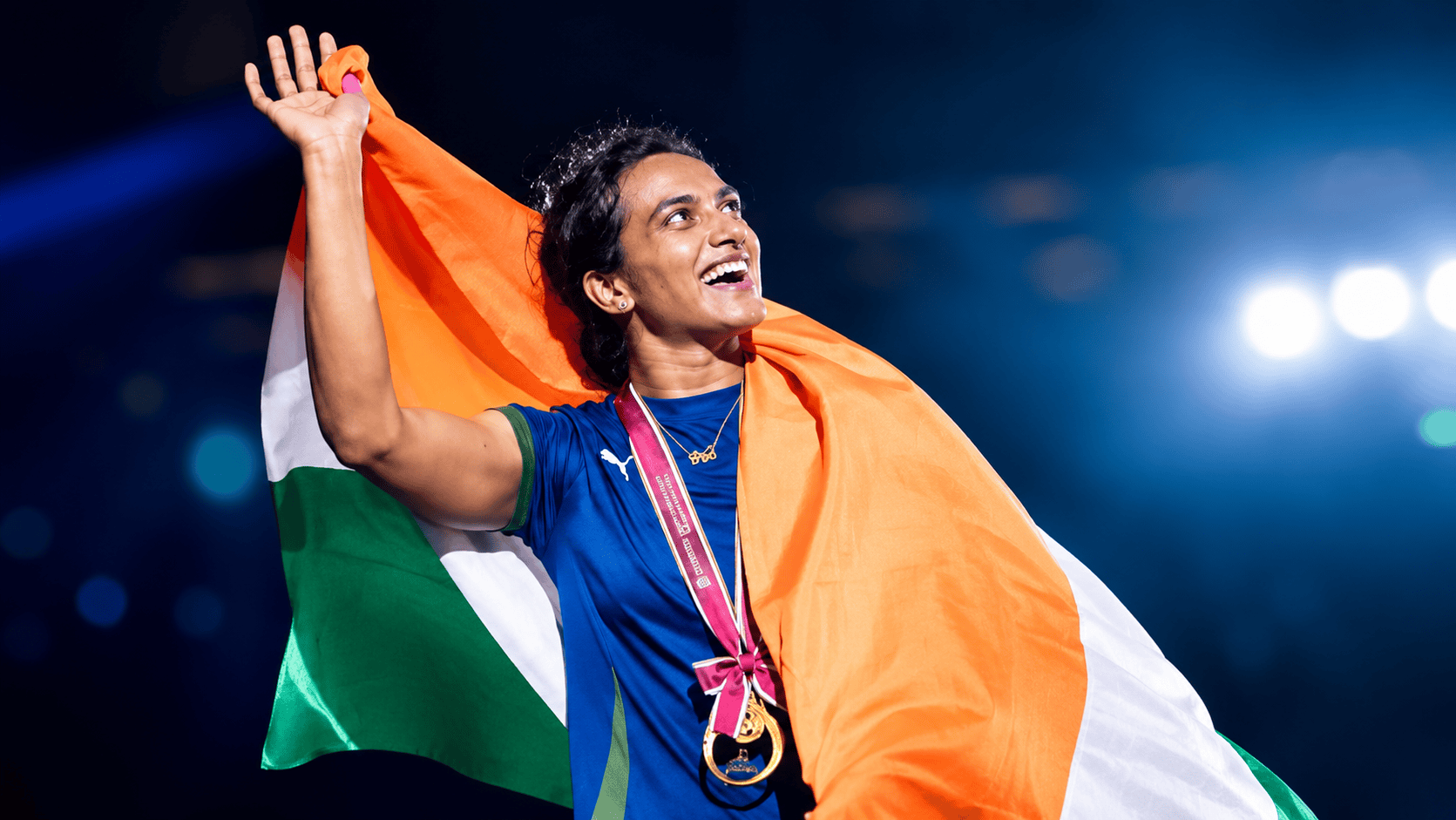


Indian women athletes have come a long way from fighting for recognition to becoming global sporting icons. Across generations, they have challenged stereotypes, overcome social and financial barriers and established India’s presence on the international sporting stage.
Their journey is not merely a story of medals and records. It is a story of courage, sacrifice, determination and a gradual transformation in how the country views women in sport.
One of the earliest icons to inspire a generation was PT Usha. Her fourth-place finish in the 400m hurdles at the 1984 Los Angeles Olympics, missing a bronze medal by just 0.01 seconds, remains one of the most memorable performances in Indian athletics. Although an Olympic medal eluded her, Usha established herself as one of Asia’s finest athletes and showed that Indian women could compete against the world’s best.
The breakthrough on the Olympic podium came in 2000 when Karnam Malleswari won bronze in weightlifting at the Sydney Olympics, becoming the first Indian woman to win an Olympic medal. Her historic achievement changed perceptions and gave young girls a new sporting aspiration.
The next generation carried that legacy forward.
MC Mary Kom, emerging from Manipur, became a global boxing icon with six world championship titles and an Olympic bronze at London 2012. Her journey was particularly significant in a sport traditionally associated with men. She also demonstrated that motherhood need not end an athlete’s competitive ambitions.
Saina Nehwal’s Olympic bronze in badminton at London 2012 opened another chapter, while PV Sindhu raised India’s profile further with silver at Rio 2016, bronze at Tokyo 2020 and a world championship title in 2019.
The Rio Olympics were particularly significant for Indian women. Both of India’s medals at the Games came from female athletes — Sindhu and wrestler Sakshi Malik, whose bronze made her the country’s first female Olympic wrestling medallist.
The momentum continued at Tokyo 2020, where weightlifter Saikhom Mirabai Chanu won silver and boxer Lovlina Borgohain secured bronze. The Indian women’s hockey team also created history by reaching the Olympic semifinals for the first time, eventually finishing fourth.
For the Northeast, these achievements carry a special significance. Mary Kom from Manipur, Mirabai Chanu from Manipur and Lovlina Borgohain from Assam have become symbols of sporting excellence, demonstrating that world-class talent can emerge from the region despite infrastructure and resource challenges.
Lovlina’s Olympic bronze was a landmark moment for Assam, making her the state’s first Olympic medallist. Their journeys have inspired countless young athletes across the Northeast to look beyond geographical limitations and dream of representing India.
The transformation has continued into the Paris 2024 Olympics. Shooter Manu Bhaker became the first Indian woman to win an Olympic shooting medal and the first athlete from independent India to win two medals at a single edition of the Games, securing two bronze medals. Her achievement further strengthened India’s growing presence in women’s shooting.
Beyond the Olympic arena, Indian women have also made their mark in world championships and professional sport. Boxer Nikhat Zareen has emerged as a two-time world champion, while para-shooter Avani Lekhara became the first Indian woman to win Paralympic gold.
Cricket has witnessed perhaps one of the most significant transformations in recent years. The Indian women’s team created history on November 2, 2025, by winning its maiden ICC Women’s Cricket World Cup title, defeating South Africa by 52 runs in the final in Navi Mumbai.
The triumph, led by memorable performances from Shafali Verma and Deepti Sharma, represented a defining moment for women’s cricket in India. The emergence of the Women’s Premier League, alongside equal international match fees and growing commercial opportunities, has also helped strengthen the professional pathway for women cricketers.
However, despite the progress, challenges remain. Access to quality infrastructure, scientific training, nutrition, financial support and sustained competition continues to be uneven, particularly for girls from rural and economically disadvantaged backgrounds.
The success of a handful of champions must translate into opportunities for thousands of aspiring athletes across the country.
From PT Usha’s determination to Karnam Malleswari’s historic Olympic medal, from Mary Kom’s boxing legacy to Sindhu’s badminton triumphs, and from Mirabai and Lovlina’s Olympic success to India’s historic women’s cricket World Cup victory, each generation has expanded the possibilities for the next.
Indian women athletes are no longer simply breaking barriers. They are setting benchmarks, changing perceptions and redefining the country’s sporting identity.
Perhaps their greatest achievement is not just the medals they have won, but the confidence they have given the next generation of girls to believe that they, too, can make history.