

Deepak Singh
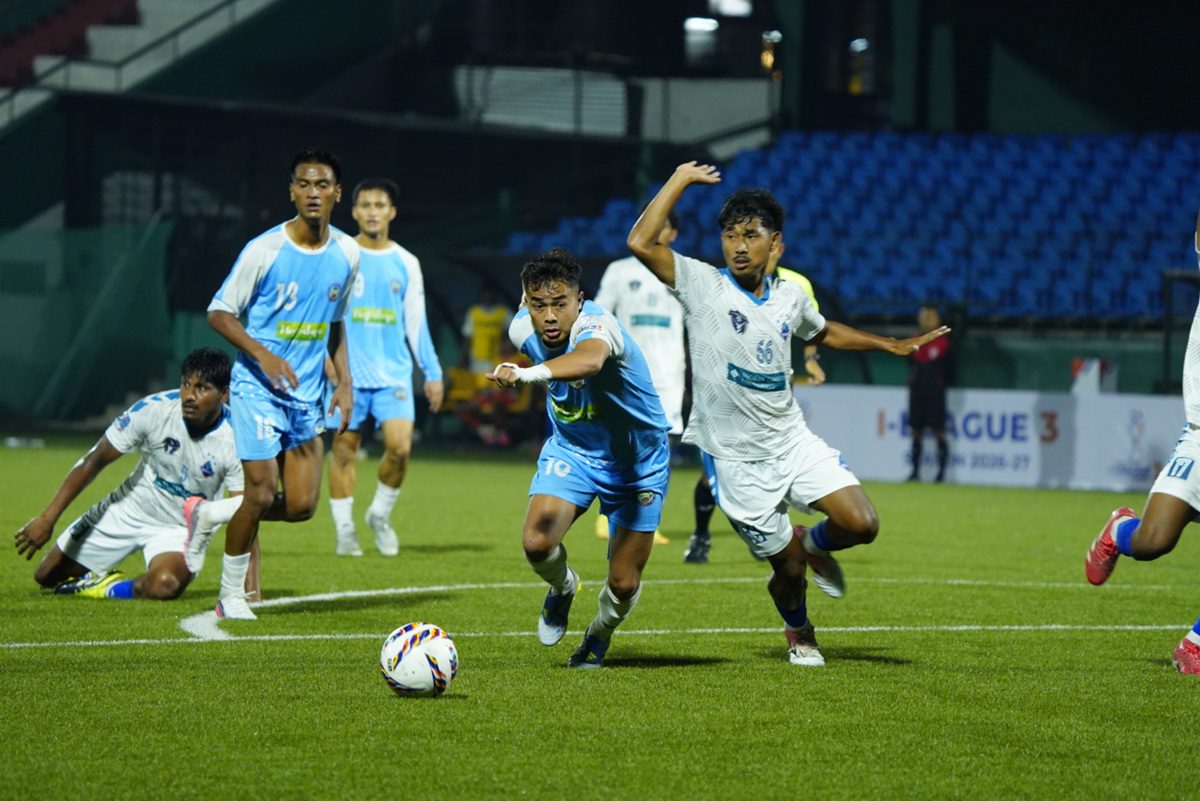
The clash between Nongkseh SS&CC and Lakecity FC may be over, but the buzz surrounding it has hardly faded. It was a fiercely contested encounter, dramatic on and off the pitch, with an intensity rarely witnessed in Shillong football. The aggression was not merely tactical; it was visible in the physical challenges, heated exchanges and frustrated reactions of the players, while the stands echoed with loud, increasingly charged responses from the spectators. By the final whistle, sections of the crowd were booing the match officials and the visiting side, an unusual sight in a city where football supporters are generally quick to applaud good play, even from their opponents. For long stretches, the contest carried the tension of a final rather than a group-stage fixture, with the atmosphere threatening to overshadow the football itself. Lakecity, meanwhile, had little vocal support of their own in the stands, making the home crowd’s intensity all the more pronounced. It was a night that had almost everything: quality football, physical confrontations, controversy, frustration and a result that left plenty to discuss long after the final whistle.
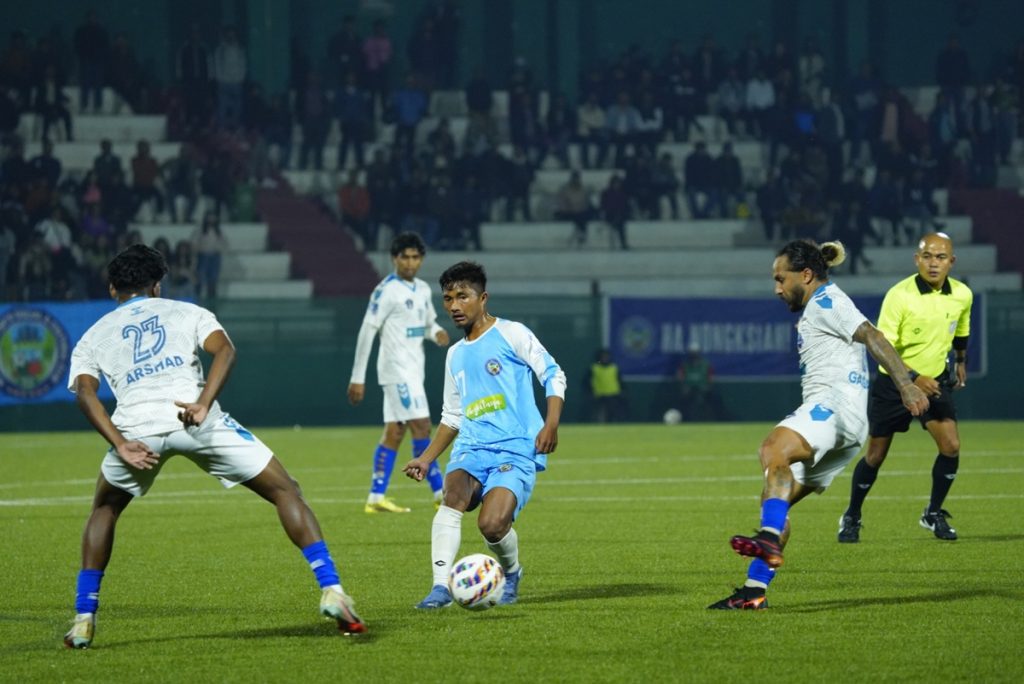
Nongkseh suffered their first defeat of the I-League 3 campaign, going down 1-0 to Lakecity FC at the SSA Stadium in Shillong on Wednesday. Abhijit Tawhare’s 58th-minute strike settled a fiercely contested Group C encounter, but the result was about much more than a single goal. Two red cards, missed opportunities and a failure to maintain composure under pressure combined to make it a costly evening for the Shillong side.
Having scored eight goals across their previous two matches, Nongkseh entered the contest with considerable confidence. Against Lakecity, however, they encountered a different kind of challenge. The Bhopal side brought physical intensity, strong defending and mind games, managing to get under the skin of Nongkseh’s players and test them in ways they had not experienced in their earlier matches.
Nongkseh remain a quality side. Their technical ability, attacking power and resilience were evident even when they were down to ten men. Even when they were further reduced to nine men, they continued to create chances. Yet the defeat exposed a fatal weakness that is rarely discussed in local football but one that opponents at this level are likely to take advantage of – emotional control.
A different kind of test from the opening whistle
The intensity was evident almost immediately. There were physical challenges, pushing, heated exchanges and confrontational gestures as both sides sought to establish themselves. Lakecity appeared particularly effective at making the contest uncomfortable for the home side, although whether this was a deliberate attempt to provoke Nongkseh cannot be established from the match alone.
The contrast with Nongkseh’s previous two games was noticeable. In those encounters, the Shillong side had more freedom to play its natural game, they had time to settle and overall environment of the matches remained normal. Even against Chhaygaon FC, the early physical exchanges eventually gave way to a contest in which Nongkseh could impose their style.
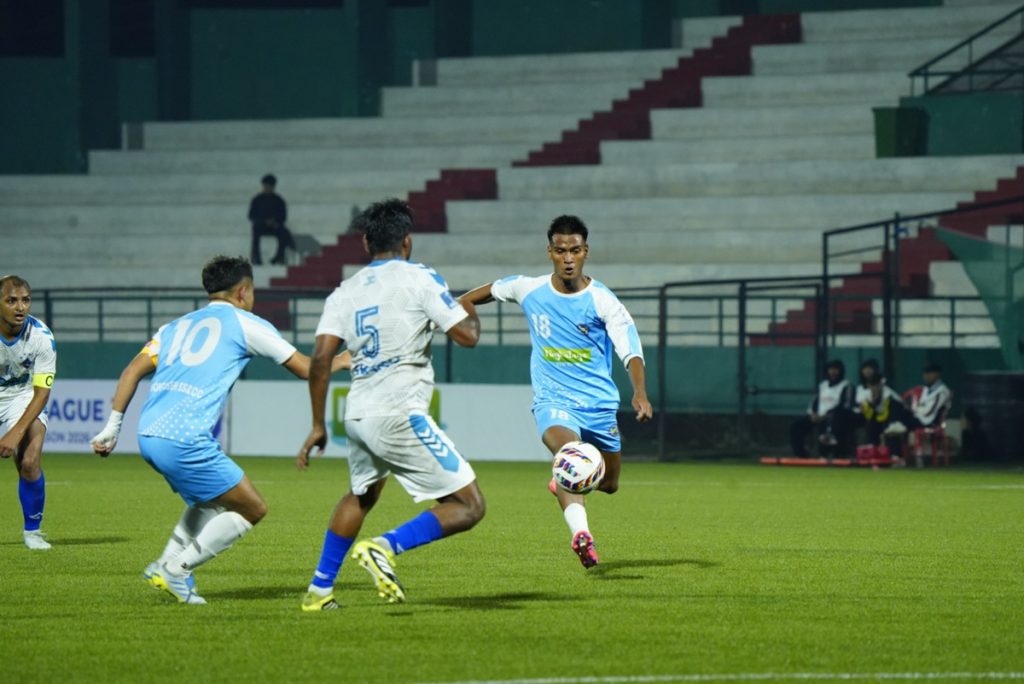
Lakecity offered a different proposition. They did not allow Nongkseh to settle down – they were aggressive in their challenges, competed physically and defended with purpose.
This was where Nongkseh began to struggle.
Having followed the team across state and national competitions over the past year, it was unusual to see them become so visibly worked up. Physical challenges are an integral part of football, particularly at the national level, where opponents will test a team’s composure as well as its technical quality. The response to that pressure is part of the contest.
Nongkseh needed to recognise that distinction. It needed to understand that there is a difference between playing with aggression and allowing aggression to dictate decisions.
In a match of this intensity and importance, the home side allowed the latter to take over whereas they should have remained calm and focused on the bigger picture.
The first Red Card changed the contest
The defining moment of the opening half came in the 20th minute, when Ieitlang Syiemlieh was sent off following a violent clash with Lakecity defender Marvin Khammuanthang.
The dismissal immediately changed the balance of the game. Nongkseh lost an attacking option and had to reorganise while continuing to contend with a physically demanding opponent. The remaining players were required to cover more ground, protect spaces that would otherwise have been covered by their teammate and manage the additional pressure of playing a man down.
What made the incident particularly costly was that the match still had 70 minutes of play left and Nongkseh needed to manage that time with discipline, patience and a clear tactical plan.
Instead, frustration started to show among the home side. Owanijuh Pajuh was booked just six minutes after the first red card, which clearly suggested that Nongkseh were struggling to settle emotionally.
Lakecity also received a total of five yellow cards in the contest, reflecting the match’s physical and intense nature. However, Nongkseh’s extreme reactions resulted in consequences far more damaging to their chances.
A defensive vulnerability Lakecity were able to exploit
Despite being reduced to ten men, Nongkseh continued to show why they are considered a dangerous attacking side. They remained capable of moving the ball forward and creating opportunities, but their attacking structure also revealed a vulnerability that Lakecity eventually exploited.
Nongkseh’s full-backs, Kynsailang Khongsit and Aibiang, are important to their attacking play. Their willingness to push forward gives the team width and additional options in the opposition half. However, when both advance, the defensive line can become stretched, leaving Banraplang Pyngrope and Arlangky to protect the space behind them.
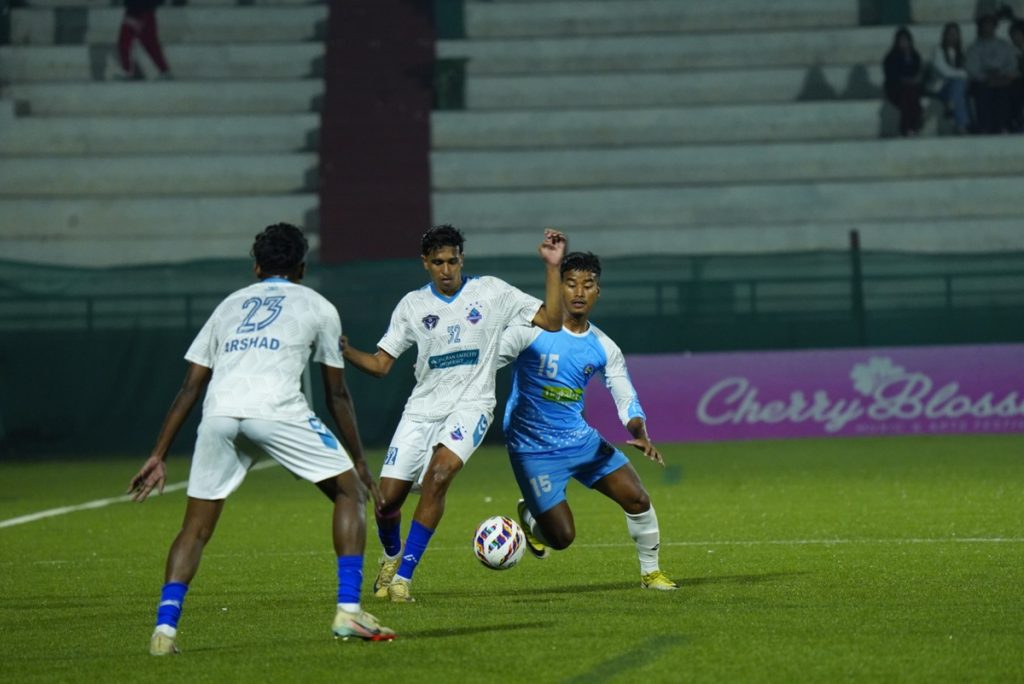
This arrangement can work when Nongkseh control possession and prevent opponents from launching quick attacks. Against a team capable of releasing the ball quickly, however, it carries a risk. If possession is lost or the opposition can bypass the midfield, the centre-backs may be left defending a large area with limited cover.
Lakecity’s goal in the 58th minute illustrated that danger.
A quick release from the Lakecity defence and a series of crisp passes moved the ball rapidly into Nongkseh’s half. Abhijit Tawhare received the ball in the space between the defenders and moved past Arlangky with an excellent burst of acceleration. Banraplang was unable to close the gap quickly enough to prevent the attack, while goalkeeper Wanteilang Malngiang advanced in an attempt to cut down the angle. Tawhare needed just a touch to slot it past the keeper to make the opportunity count for his side.
It was an excellent attacking manoeuvre, and Lakecity deserve credit for executing it.
For Nongkseh, the recovery appeared slow, and the defenders did not close the gap in time to prevent Tawhare from getting into a dangerous position. Playing with ten men also made the situation challenging.
Nongkseh will have to examine this serious shortcoming, which has been pointed out in previous analysis. Only this time, the opposition were able to take advantage and exploit the space behind their defensive line.
Nongkseh continued to create chances, but Hitendra stood firm
The goal did not end Nongkseh’s attempts to get back into the match. They continued to search for an equaliser, and there were moments when their attacks offered hope.
In the 44th minute, Hardy Cliff Nongbri set up Owanijuh Pajuh, whose close-range effort was saved by Lakecity goalkeeper Hitendra Singh. It was a significant opportunity, and Hitendra’s intervention prevented Nongkseh from taking the lead before half-time.
Nongkseh had another promising moment in the 51st minute. Hardy delivered a cross that resulted in Saurabh Nikam’s attempted defensive header travelling towards his own goal, but Hitendra was again alert enough to make the save.
These incidents underline two important aspects of the match. Nongkseh were capable of creating dangerous situations, but Lakecity’s goalkeeper and defensive unit were equally capable of responding to them.
This is where Nongkseh’s finishing became a concern.
Creating opportunities is only one part of the attacking process. The next step is to make those opportunities count, particularly against a goalkeeper who is in good form and a defence that is difficult to break down.
Nongkseh’s attempts too often failed to trouble Hitendra sufficiently. Greater accuracy and variation in shot placement might have made his task more difficult. Rather than directing efforts towards areas within the goalkeeper’s reach, Nongkseh needed to make him move, test the corners or force him to react to lower shots near the posts.
That does not mean every attempt should be aimed at the top corner. But against a goalkeeper having an excellent game, the margin for error becomes smaller.
Hitendra was one of the principal reasons Nongkseh could not find an equaliser.
Were Nongkseh too predictable in attack?
In their earlier matches, Nongkseh had been versatile in their attacks – they took aim from distance as well threaded deep into opposition penalty area. Against Lakecity, however, much of their attacking play appeared to depend on carrying the ball into the opposition half and attempting to work it into dangerous areas.
While there is nothing wrong with that approach, it is typical of Shillong football and follows a well-established, familiar pattern. The moment Nongkseh entered that zone, their opportunities became increasingly limited, and they grew less dangerous and all too predictable.
Lakecity defended compactly and were difficult to penetrate. Repeated attempts to work the ball into the penalty area gave them opportunities to recover their positions and crowd the spaces in which Nongkseh’s forwards wanted to operate.
Long-range shooting could have offered another option. A well-struck effort can force a goalkeeper into a save, produce a rebound or encourage defenders to step out and close the shooter. That, in turn, can create space for forwards making runs behind them.
Nongkseh did attempt shots from distance in the later stages. Dawanchwa’s effort in the 85th minute went narrowly over, while Owanijuh tried from range a minute later. The issue, therefore, was not a complete absence of long-range attempts but whether the team used this option effectively and consistently enough.
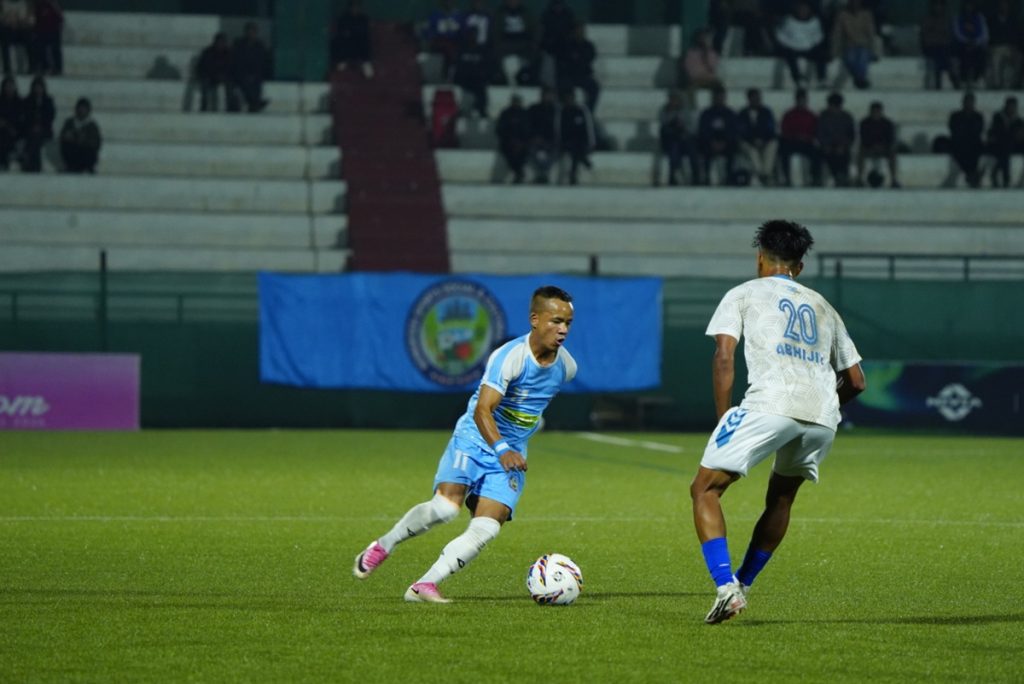
With ten men, and eventually nine, Nongkseh needed to be particularly economical with their attacking moves. Carrying the ball deep into the opposition half and trying to create the perfect opening required time, movement and support from teammates who were already covering additional ground.
A quicker release, more decisive shooting and greater variety in the final third might have offered a different route back into the game.
Banraplang’s dismissal made the task even harder
If the first send-off placed Nongkseh under pressure, the second severely limited their ability to recover.
Banraplang Pyngrope was sent off in the 76th minute following an incident involving Lakecity’s Arif Shaikh. As Banraplang was releasing the ball, Arif attempted a sliding tackle from behind, catching the defender’s heel. However, Banraplang reacted by stamping on Arif’s leg, an extreme response that cost him his composure and proved particularly costly for the home side, who lost a key defender at a crucial stage of the match.
Banraplang has been vital to Nongkseh’s defence. His ability to protect the back line provides the full-backs with greater freedom to advance and contribute to attacks. Removing him from the defensive structure therefore had implications beyond the loss of a single player.
Nongkseh were now down to nine men, with little time remaining to find an equaliser. Their options became increasingly restricted, and the balance between attacking and defending became even more difficult to manage.
Banraplang’s dismissal was a costly loss of composure. Whatever the circumstances of the preceding challenge, reacting by stamping on an opponent was an action that put both the player and his team at risk.
At this level, defenders must be able to respond to physical challenges without allowing frustration to dictate their decisions.
With nine players, Nongkseh had very little room to mount a sustained attack while maintaining sufficient cover at the back.
It was a costly moment that Lakecity did not need to create for themselves. Nongkseh’s own actions had made an already difficult task considerably harder.
Resilience was visible, but it was not enough
Despite the dismissals, Nongkseh did not simply abandon the contest. They continued to look for a way back, and the presence of Hardy, Chesterpaul Lyngdoh, Owan, Dawanchwa and Shano Tariang offered attacking options.
Dawanchwa’s long-range effort in the 85th minute and Owan’s attempt in the 86th showed that Nongkseh were still searching for an opening. Yet Lakecity’s solid defence and Hitendra’s goalkeeping kept them out.
Playing with one fewer player is difficult; playing with two fewer becomes a game of survival. Yet, Nongkseh continued to compete despite being at such a disadvantage.
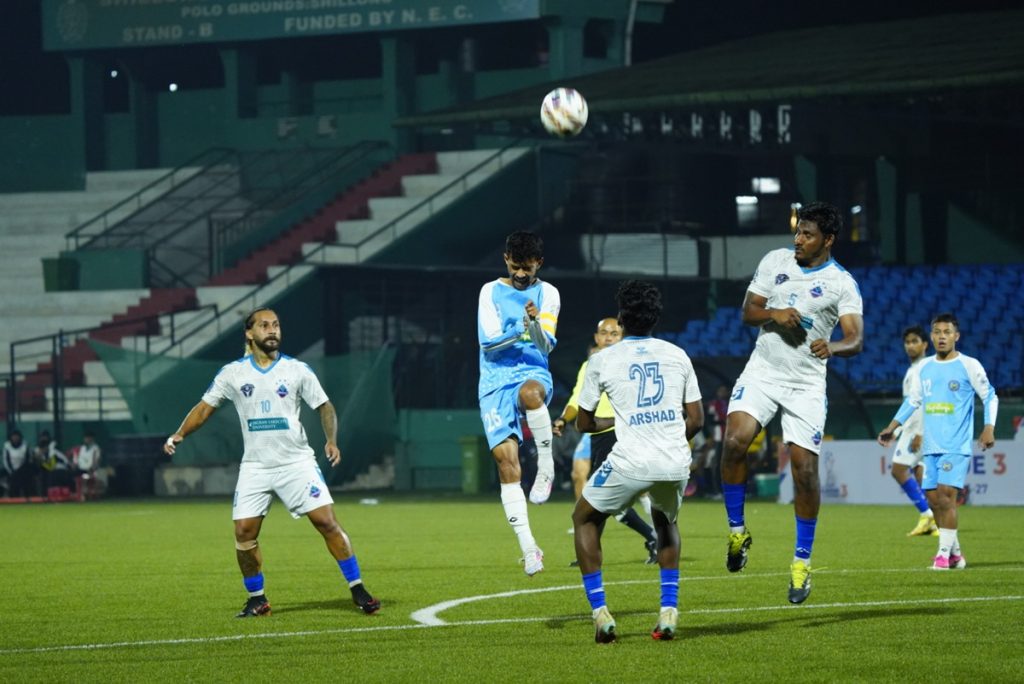
However, resilience cannot compensate indefinitely for poor decision-making. The team had already spent much of the match managing the consequences of the first dismissal, and the second left them with little realistic room to recover.
Were Nongkseh still the better side?
There is a case to be made that Nongkseh showed good attacking intent and technical quality. Their passing, movement and ability to create chances remained evident, especially before the second red card.
But being technically impressive is not the same as controlling a match. Lakecity were more effective in the decisive moments. They maintained their defensive shape, capitalised on the space available to them and protected their advantage.
It is also worth noting that Lakecity are not an inexperienced opponent. They have won the Madhya Pradesh Premier League four times in a row and entered the match with previous experience of playing in I-League 3. They are an experienced unit that know how to build a game, bounce back, create opportunities and exploit opponent’s mistakes. Besides their first league match in I-League 3’s this season, which they lost to Godavari FC, they have gotten better and won the other two matches before their final group encounter with Nongkseh.
However, Nongkseh’s defeat should not be interpreted as a team lacking quality to compete at this level. Instead, it showed the difference between playing good football and making the right decisions under pressure.
Nongkseh had the skills to threaten Lakecity. What they lacked was the composure to manage the contest when it became heated and the precision to make their opportunities count.
The warning ahead of Godavari clash
The defeat leaves Nongkseh facing a crucial final group match against Godavari FC on Friday. With six points from their first three matches, their route to the next round is now under significant pressure.
Godavari have shown their quality throughout the group stage, and Nongkseh cannot afford to approach the match as though their technical ability alone will be enough. The challenge is made more difficult by the suspensions of Ieitlang and Banraplang.
Ieitlang’s absence reduces the attacking options available to the team, while Banraplang’s suspension could force changes to a defence-line that already has vulnerabilities. Nongkseh will need to consider how to compensate for those losses without surrendering the attacking qualities that have made them dangerous.
The full-backs may need to choose their forward runs more carefully, while the midfield must be prepared to provide cover when possession is lost. The team also needs to release the ball more quickly, make better use of shooting opportunities and remain disciplined when opponents challenge them physically.
Set pieces are another area requiring attention. Nongkseh must be more effective from free-kicks and corners, particularly in a match where chances may be limited and every attacking opportunity could prove decisive.
Qualification calculations will also matter. A victory may not be enough on its own to secure the position Nongkseh want; the margin of victory and the results elsewhere could influence their prospects. The precise requirement will depend on the final group standings and the tournament’s applicable tie-breakers.
The team must therefore prepare for a demanding contest on several fronts: technically, tactically, physically and mentally.
The lesson is bigger than one defeat
Owan’s continued contribution, alongside the performances of Chesterpaul and Hardy, remains encouraging. Dawanchwa and Shano also have important roles to play, while the team must find ways to make better use of its available attacking options.
At the same time, Nongkseh cannot afford to lose players to avoidable dismissals over emotional outbursts, leave their defensive line exposed without adequate cover or allow promising attacking moves to end without testing the goalkeeper sufficiently.
The Lakecity match offered a reminder that opponents at this level will test more than a team’s passing, movement and stamina. They will look for weaknesses in its defensive structure, challenge its decision-making and take advantage when it loses concentration.
Whether Lakecity deliberately sought to provoke Nongkseh remains unknown. What the match demonstrated, however, is that the Shillong side lost its cool and control when the contest became heated.
That is the lesson Nongkseh must take forward.
They remain a talented and competitive side, and Friday’s clash is crucial for it to remain in the national competition. They have only one option if they are to advance to the final round, which is to win, and that win must come with a big margin.