

Prarthana Hazarika
GUWAHATI, June 20: Amid growing concerns over sexual harassment and abuse in Indian sports, clinical psychologist Dr Nimi Borgohain has warned that the trauma suffered by athletes can leave lasting emotional scars, often causing them to lose trust in people and institutions around them.
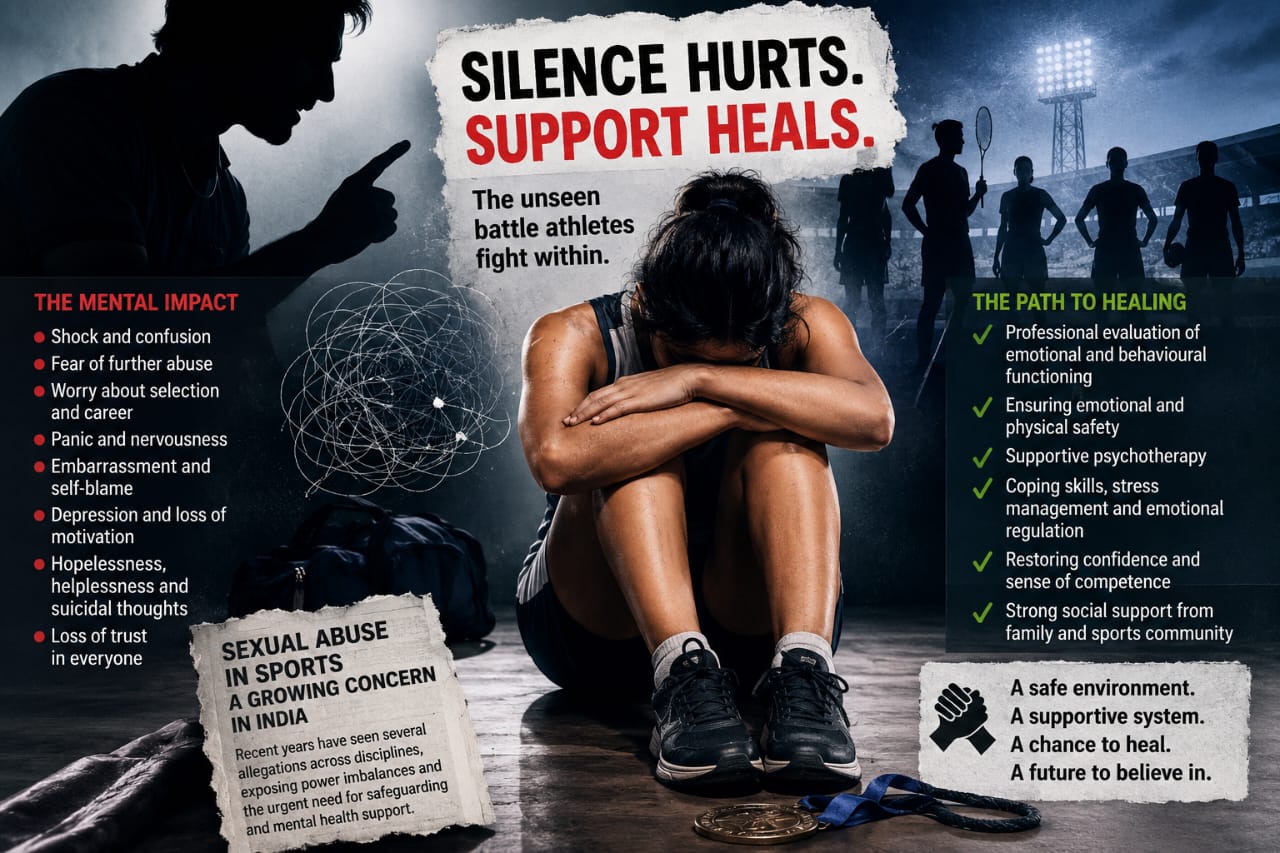
Speaking exclusively to the writer, Dr Borgohain said athletes who experience abuse are initially gripped by shock, confusion and fear, particularly when the perpetrator is someone in a position of authority.
“The first reaction is emotional overwhelm, confusion and uncertainty about whether the behaviour itself is abusive. If the person involved is a trusted authority figure, athletes often fear further abuse and worry that speaking out could affect selection opportunities,” she said.
Her remarks come at a time when allegations of sexual misconduct in Indian sports have increasingly come into the spotlight. The country witnessed unprecedented protests by Olympic medallists and leading wrestlers in 2023 against former Wrestling Federation of India chief Brij Bhushan Sharan Singh over allegations of sexual harassment. Over the years, athletes from disciplines including Gymnastics, Swimming,Cricket,Judo, Athletics etc have also raised concerns over harassment and abuse, exposing systemic issues and power imbalances within sporting structures.
According to Dr Borgohain, victims frequently experience panic, heightened nervousness and feelings of embarrassment, while many fear being judged or blamed by others.
“Depression, loss of motivation and enjoyment, feelings of hopelessness and helplessness and, in severe cases, suicidal thoughts can occur. Trauma can make athletes lose trust towards everyone,” she said.
Dr Borgohain stressed that the psychological consequences of abuse are often overlooked despite being as serious as the physical and professional repercussions.
“A clinical psychologist first evaluates the emotional and behavioural functioning of the athlete and ensures emotional and physical safety. Supportive psychotherapy helps them learn coping skills, stress management and emotional regulation while restoring confidence and a sense of competence,” she said.
She added that the role of family members and the wider sporting ecosystem is crucial in the healing process. “Enhancing social support from family and people associated with sports is equally important. Survivors need to feel safe, heard and supported,” she said.
The issue of sexual abuse in sports has gained renewed attention in India following several high-profile allegations in recent years, prompting calls for stronger safeguarding mechanisms and better mental health support for athletes.