

Exclusive | The Meghalayan Express | By Prarthana Hazarika
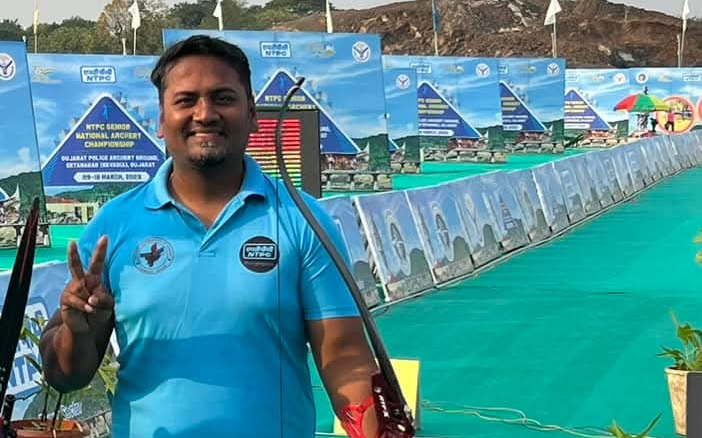
SHILLONG: The Northeast has the potential to emerge as one of India’s strongest archery hubs, but realising that ambition will require sustained investment in infrastructure, scientific training, quality coaching and institutional support, believes Olympian archer and coach Jayanta Talukdar.
Speaking to Meghalaya Sports following the conclusion of the 2026 NTPC Senior National Archery Championships in Shillong, Talukdar said the region was not short of talent but needed a stronger sporting ecosystem to nurture young archers and prepare them for international competition.
“Talent is everywhere, but opportunities are not always equally distributed. Hosting championships like this helps bridge that gap,” he said.
Talukdar said organising national-level competitions in the Northeast gives young archers an opportunity to compete against some of the country’s best without having to travel long distances. Such exposure also helps them understand the technical standards, competitive environment and professionalism required at the national level.
He described the Shillong championship as an important step towards bringing greater national sporting attention to the region and demonstrating its ability to host major competitions.
However, he hopes the event will lead to a sustained movement rather than remain a one-time occasion.
“My vision is to see more archers from the Northeast representing India at the Olympics and winning medals at the international level,” he said.
Identifying infrastructure as one of the biggest priorities, Talukdar called for more scientifically equipped archery centres with proper shooting ranges, indoor training facilities, modern equipment and strength and conditioning support.
He emphasised the need for all-weather training infrastructure so that athletes can maintain consistency irrespective of rain, extreme heat or other weather conditions.
Quality coaching, he said, is equally important. The region needs more qualified and experienced coaches who understand modern international standards, with regular technical assessments, performance monitoring and opportunities for coaches to upgrade their knowledge.
Talukdar also stressed that modern archery has evolved beyond talent and practice, with sports science and technology playing an increasingly important role in competitive performance.
“Biomechanics, sports psychology, nutrition, physiotherapy, strength and conditioning, video analysis and performance data play a very important role,” he said.
He believes these services must become an integral part of an athlete’s training environment if archers from the region are to compete consistently at the highest level.
Beyond infrastructure and coaching, Talukdar called for stronger coordination between state governments, sports departments, the Sports Authority of India, archery associations and corporate partners.
Young athletes, he said, need long-term financial assistance, quality equipment, competition exposure and scholarships. Promising talent should not be forced to abandon the sport because of the financial burden of training and competing.
He also advocated a structured grassroots-to-elite pathway, with talented children identified early and provided with systematic training to prepare them for national and international competitions.
Drawing from his own journey in international archery, Talukdar said reaching the highest level required years of disciplined and systematic preparation.
“Talent may help you enter the competition, but infrastructure, coaching, discipline, scientific training and institutional support help you stay there and win,” he said.
For the Northeast, he believes the challenge now is to convert its sporting potential into sustained international success.
“What we need now is not just more tournaments, but a long-term vision, investment and a professional sporting ecosystem,” Talukdar said.