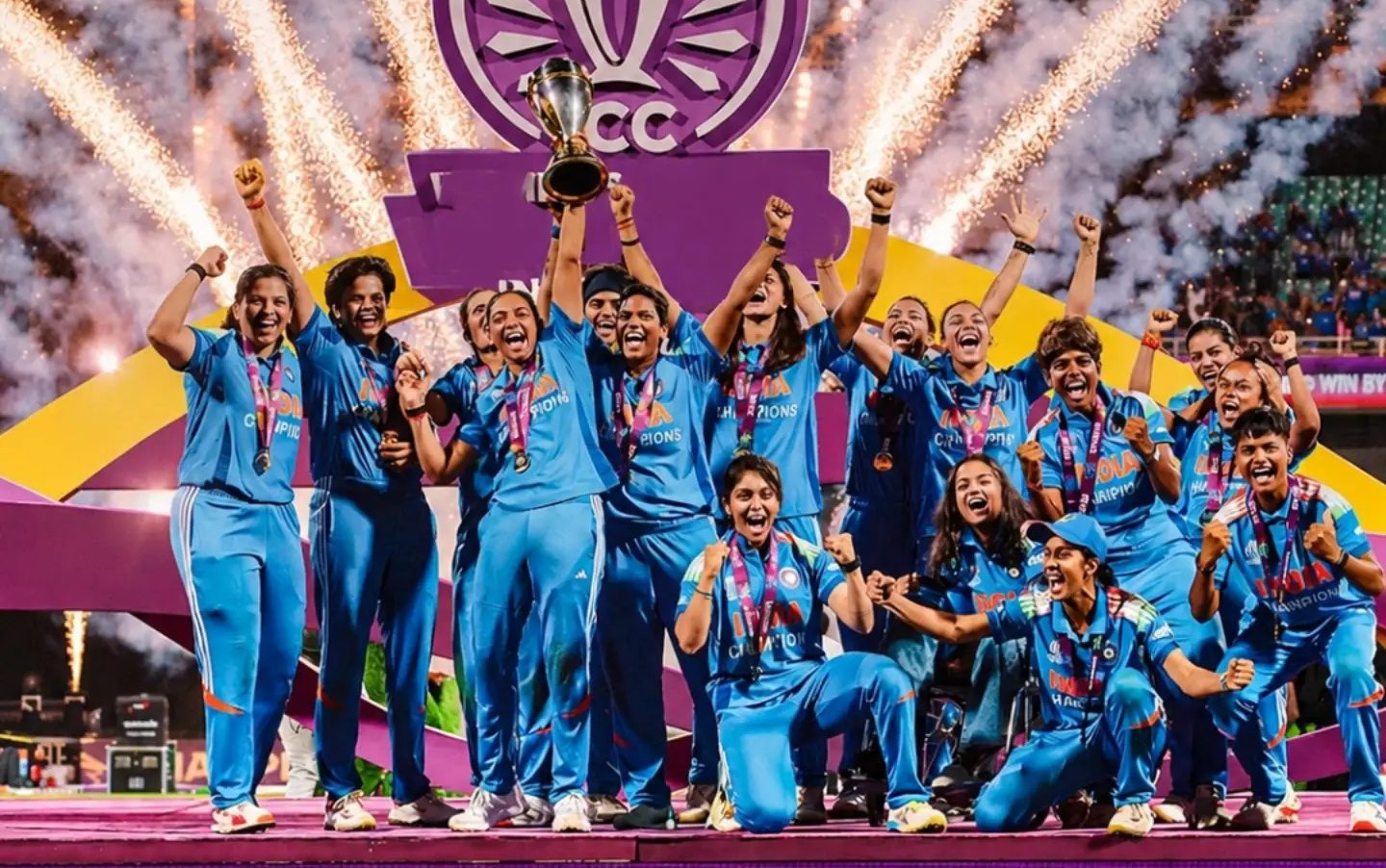


GUWAHATI, November 2: One year after lifting their maiden ICC Women’s Cricket World Cup, Indian women’s cricket is witnessing a transformation that extends far beyond the boundary ropes, with growing commercial opportunities, professional recognition and the prospect of an expanded Women’s Premier League (WPL).
On November 2, 2025, India defeated South Africa by 52 runs in the final at Navi Mumbai to end decades of waiting for a global ODI title. Shafali Verma’s 87 and Deepti Sharma’s 58 powered India to 298 for seven before Deepti claimed five wickets for 39 runs to seal a historic victory.
The triumph under Harmanpreet Kaur marked a turning point for a team that had previously finished runners-up in 2005 and 2017.
The impact has since extended across formats. India’s remarkable 270-run Test victory over England at Lord’s in July 2026 further underlined the team’s growing stature in international cricket.
A major driver of this transformation has been the Women’s Premier League, launched in 2023. The tournament has brought unprecedented visibility, corporate investment and professional opportunities to women’s cricket, connecting emerging domestic players with some of the world’s leading cricketers.
The BCCI is now considering expanding the WPL beyond its existing five teams to create more opportunities for women cricketers. BCCI secretary Devajit Saikia indicated that the board would hold discussions on increasing the number of franchises from next year, following concerns over the limited opportunities available to players at the recent auction.
An expansion could provide additional squad positions and a wider platform for domestic talent, although no formal decision has been announced.
Financial recognition has also improved, with the BCCI introducing equal international match fees for men and women in 2022. The WPL has further strengthened the professional pathway for women cricketers.
For the Northeast, India’s success presents an opportunity to strengthen grassroots women’s cricket. The emergence of Assam’s Jintimani Kalita in the national cricket pathway highlights the region’s potential, but sustained investment in coaching, infrastructure and competitive exposure remains essential.
As Smriti Mandhana takes forward the leadership mantle following Harmanpreet’s World Cup-winning era, India’s challenge is to sustain its success and build a stronger talent pipeline.
One year after the historic triumph, the biggest achievement may be the change in aspiration: a generation of young girls now sees playing cricket for India as a realistic dream.