

Deepak Singh
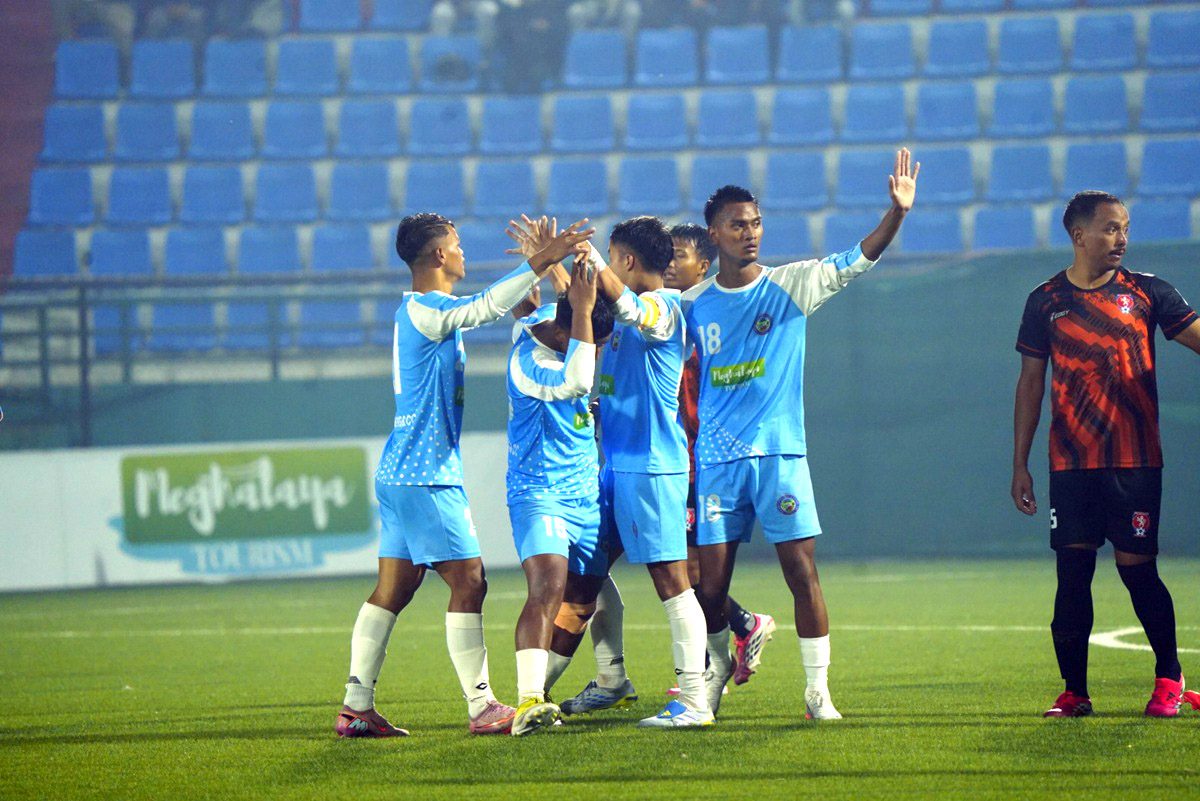
Nongkseh’s 4–1 victory over Kuppuraj FC in their I-League 3 debut on Thursday was an encouraging start to their campaign. But beyond the scoreline, what stood out was how different the team looked when compared to the Durand Cup and the Shillong Premier League. There was a greater sense of urgency, a more attacking approach and, perhaps most importantly, a squad that finally appears to have the right balance to compete at this level.
Nongkseh have always been a capable side. Their success in the Meghalaya State League and their performances in Shillong’s domestic competitions have established them as one of the teams to watch in the State. Yet, their performances, at times, had exposed certain weaknesses. Against Kuppuraj, some of those concerns appeared to have been addressed, although others remain.
The biggest difference may well be the arrival of two natural forwards, Owanijuh Pajuh and Ieitlang Syiemlieh, who joined from Bhawanipore FC, and a new custodian Wanteilang Malngiang from Shillong Lajong.
Fixing the missing piece in Nongkseh’s attack
For some time, Nongkseh appeared to be missing a particular type of player: a natural striker who could move quickly into dangerous positions and convert opportunities with accuracy.
The team could build attacks and create promising situations, but there were occasions when the final product did not match the quality of the build-up. Their tendency to work the ball into dangerous areas without always finding the finish became a familiar frustration.
The inclusion of Owan and Ieitlang appears to have addressed at least part of that problem.
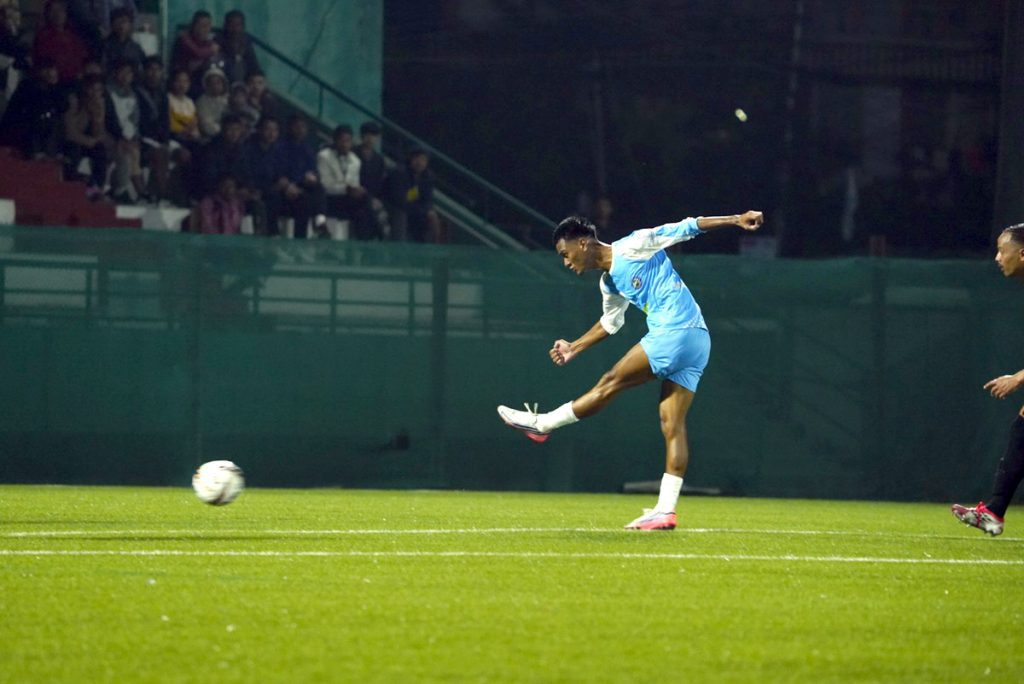
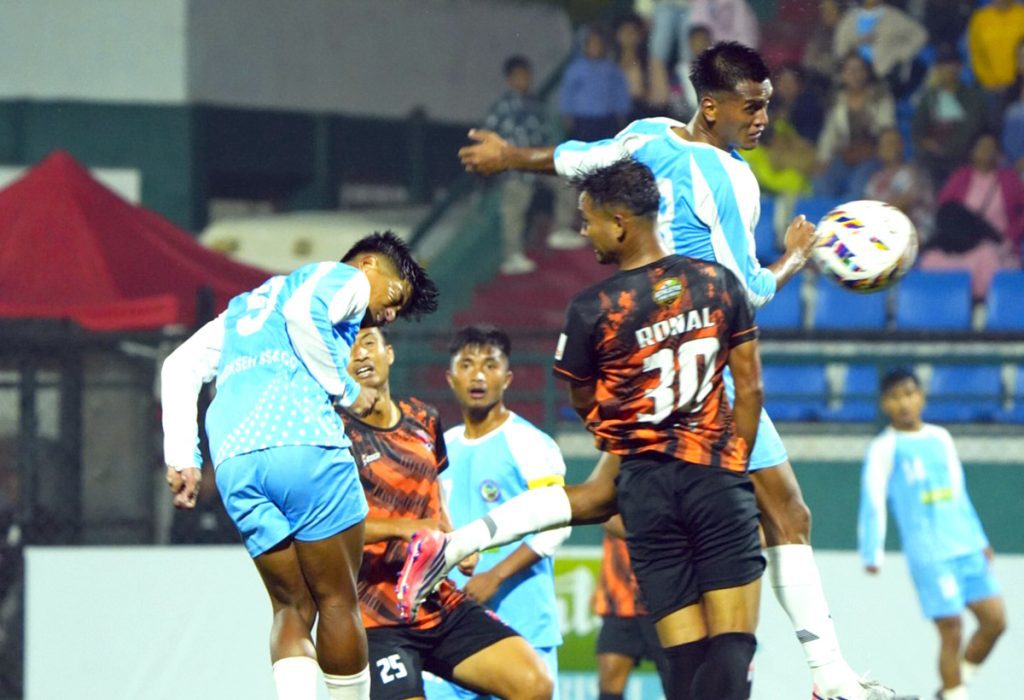
Both players were extremely bust and scored against Kuppuraj, with Owan opening the scoring in the 38th minute and Ieitlang adding the fourth in the 58th. Between them, Hardy Cliff Nongbri scored twice, including a stunning strike from the edge of the penalty area that flew past Kuppuraj custodian Emerald Dan and into the top-left corner. It was a moment of individual brilliance that underlined why Nongbri remains one of the club’s most dependable players, capable of delivering when the team needs him most.
Their contributions were important not simply because they added goals, but because they gave Nongkseh another dimension in attack. Both Owanijuh Pajuh and Ieitlang Syiemlieh won several possessions from opponents, identified and exploited spaces, made quick runs and positioned themselves in dangerous areas, as well as linked up with teammates through smart passes and well-timed assists.
Owan was directly involved in two of Nongkseh’s goals as a provider. While Kynsailang Khongsit set up Owan’s opening goal in the 38th minute, Shano Tariang provided the assist for Hardy Cliff Nongbri’s first goalin the 50th minute. Owan then turned provider, delivering a smart assist for Hardy’s second goal in the 55th minute. Three minutes later, he won possession from Kuppuraj midfielder Khangmiki Pale near the halfway line before sending a long pass towards the right flank, which Ieitlang converted to complete Nongkseh’s fourth goal.
Although one match cannot establish whether the problem has been permanently solved, nevertheless, the performance suggested that the new additions have begun to fill a gap that had been apparent for some time.
A deeper bench changes the equation
Perhaps the most encouraging development was not the starting eleven, but the options available beyond it.
Nongkseh made five substitutions against Kuppuraj, introducing two players at half-time and making three further changes after establishing a four-goal cushion. Among those brought on were familiar names such as Shano Tariang, Aenam Jyrwa, Kitboklang Pale, Fullmoon Mukhim and Banskhemlang Mawlong while Sheen Sohktung, Skillfull Tariang and Kynsaibor Lhuid remained among the attacking options available to the team.
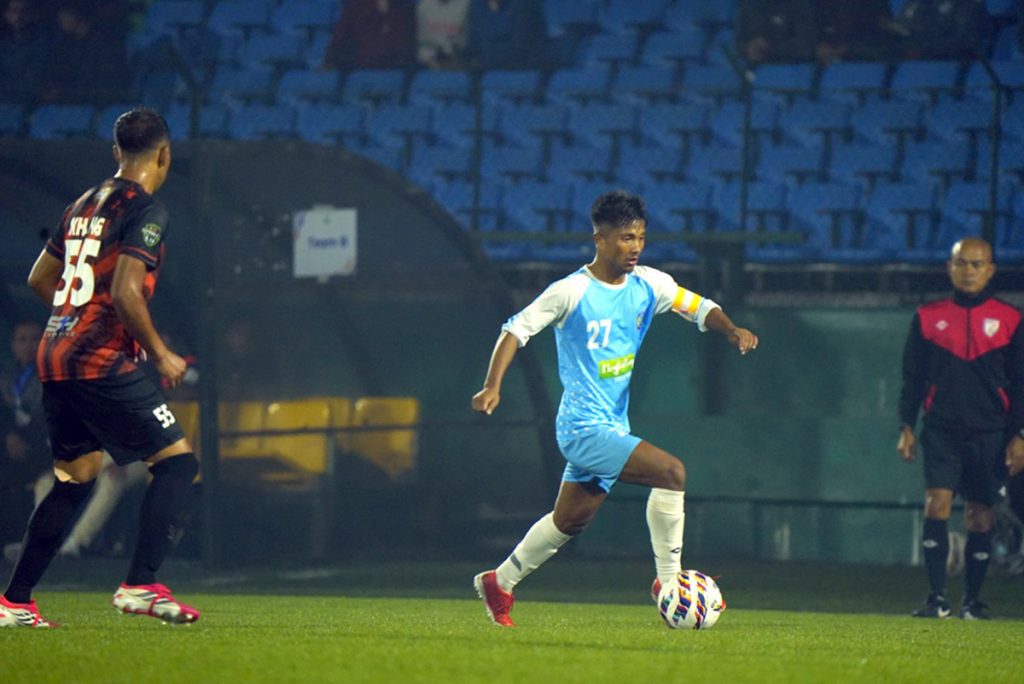
This is important for a club that has not always appeared to possess the luxury of making like-for-like changes without losing its attacking threat.
The ability to introduce established first-team players from the bench while keeping other important players in reserve gives Nongkseh greater flexibility. It allows the coaching staff to respond to changing match situations, manage workloads and preserve key players without necessarily weakening the side.
Shano, in particular, led the charge after coming on, repeatedly attempting shots from outside the penalty area. Beside the goals, his shooting added the extra spice to an excellent match.
This bench strength is particularly significant given the club’s demanding schedule. Nongkseh have had a packed season, moving from the Meghalaya State League (MSL) to the Shillong Premier League (SPL), then to the Durand Cup, back to the SPL, followed by the SSA Super Cup, before entering the I-League 3 arena with just two days of rest.
Fatigue is not merely a physical concern. Over a long season, it can affect decision-making, concentration and the ability to maintain intensity for 90 minutes.
Having more dependable options on the bench allows the coaching staff to distribute playing time more effectively. It also provides the opportunity to rest key players when the match situation permits, rather than relying on the same core group throughout every game.
Of course, squad depth must be judged over several matches, not one comfortable victory. But Thursday’s performance suggested that Nongkseh now have more options than they previously appeared to possess.
That could prove crucial as the tournament progresses.
Nongkseh are beginning to look more direct
Another noticeable difference was the team’s willingness to shoot from distance.
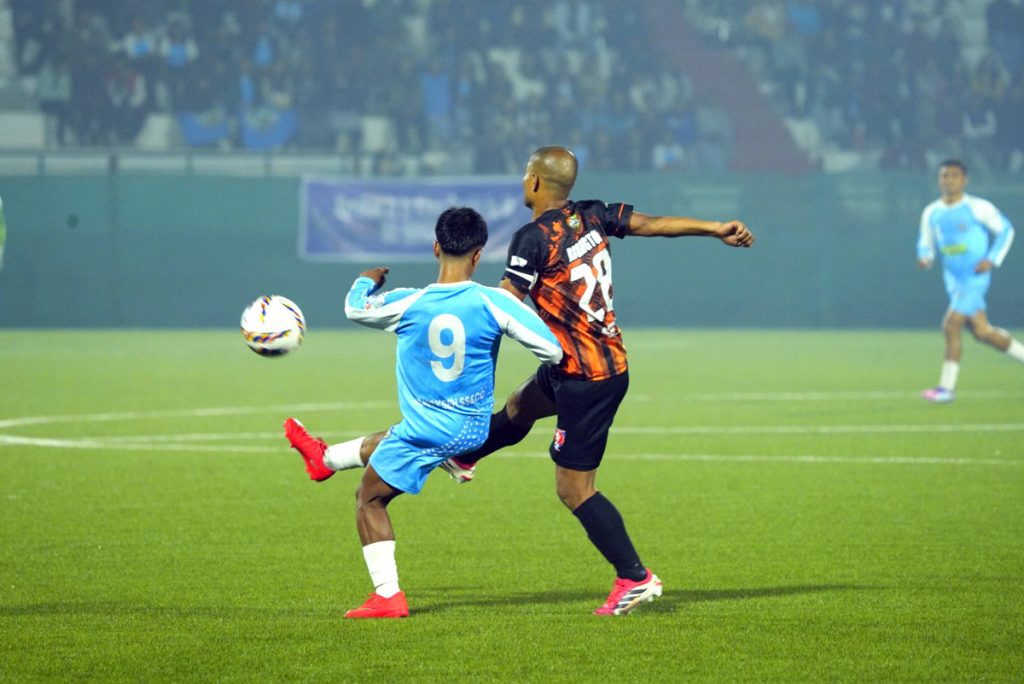
Anyone who regularly watches the Shillong Premier League will be familiar with the emphasis many local teams place on possession, short passing and working the ball towards the penalty area. It is a style that can produce attractive football, but it can also become predictable when teams struggle to turn possession into clear scoring opportunities.
Nongkseh have followed similar patterns for much of their recent campaign. Their approach had sometimes become a source of frustration when results failed to match their performances, including during the Durand Cup.
Against Kuppuraj, however, there was a greater willingness to take the opportunity to shoot.
Hamedamanbha attempted several long-rangers in the first half. His attempt in the 44th minute was particularly dangerous, forcing the Kuppuraj goalkeeper to make an important save towards the top-right corner.
After the break, Shano continued in a similar vein, testing the Kuppuraj custodian with further efforts from outside the penalty area. Some were on target, while others missed, but the willingness to test the defence from distance gave Nongkseh another way to threaten the opposition.
There was a common feature to the four goals as well: they were scored from around the edge of the penalty area, rather than being the product of prolonged passing movements deep inside the box.
This more direct approach matters because it gives the opposition less time to settle into a defensive shape. When a team is prepared to shoot from distance, defenders must close down space more quickly, potentially creating openings for runners and forwards.
It is hard to say if this is the template Nongkseh will follow from here on but Head Coach Joseph Naik has cleared that the team is ready to alter their playing style depending on opponents and situations.
The risk of leaving too much space at the back
For all the improvements in Nongkseh’s attacking game, there is still a tactical concern that the coaching staff will need to address: the space left behind when the team commits heavily to attack.
Both Kynsailang Khongsit and Aibiang operate as attacking full-backs, providing width and supporting forward movements. Their involvement adds another dimension to Nongkseh’s attack, but it also creates a potential vulnerability. When both push forward, the team can be left with fewer defenders in position to deal with a sudden counterattack, particularly when possession is lost in the opposition’s half.
The question is whether Nongkseh can recover quickly enough when their attacking moves break down. Against teams with pace and an eye for exploiting gaps, even a momentary loss of possession can turn into a dangerous situation. This is a vulnerability that opposition teams have already looked to exploit, particularly during the more frantic passages of a match.
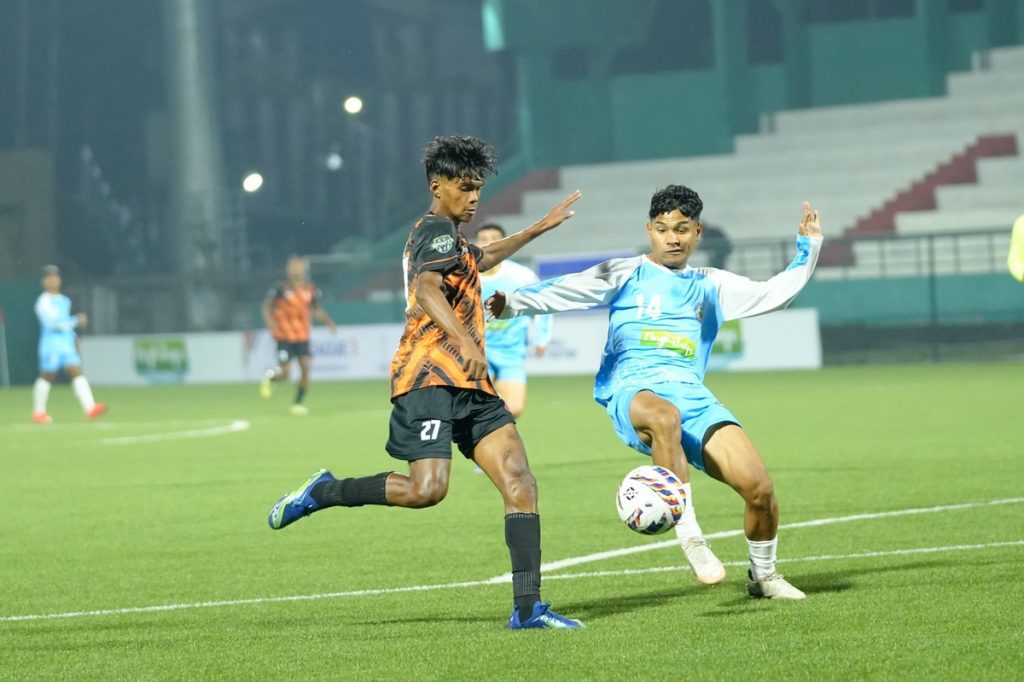
Kuppuraj offered an early illustration of the problem in the 10th minute. A sudden forward move caught Nongkseh with only two defenders in a position to deal with the developing threat. Sangti played a clever pass through the defensive line to Jaymz Bryan Pale, who found himself in a promising position. Aibiang, however, tracked back just in time to intercept the ball and clear it before Jaymz could take the shot from close range. Had Jaymz not taken those extra couple of seconds to set himself for the shot, the scoreline could have been very different.
This does not mean Nongkseh should abandon their attacking full-backs or become more cautious in their approach. What they need is a better balance between aggression and protection, ensuring that someone is always positioned to cover the space left behind when the full-backs advance.
The importance of starting and finishing strongly
In previous matches, Nongkseh have often looked capable of starting strongly before allowing the pace to drop. There would be periods when the team appeared to ease off, followed by bursts of attacking activity that brought it back into the contest.
Against Kuppuraj, there was a greater sense of sustained pressure, and a lot of action on the frontline.
The three goals scored between the 50th and 58th minutes transformed the match. Having established a two-goal advantage, Nongkseh continued to attack rather than immediately settling into a more conservative approach.
They could have added more goals, too. A number of promising opportunities went unconverted, reminding us that even a dominant performance does not guarantee that every chance will be taken.
That is football. What matters is the willingness to continue creating opportunities and putting the opposition under pressure.
Yet, if there was one moment that interrupted the otherwise positive picture, it came in the 88th minute.
A casual back-pass from Kynsailang Khongsit towards the goalkeeper was intercepted by Kuppuraj’s Jaymz Bryan Pale, who converted the opportunity to make it 4–1.
It was the kind of lapse that can be dismissed when a team is comfortably ahead. But doing so would miss the point.
The goal appeared to come from a momentary loss of concentration rather than an attacking move that had dismantled Nongkseh’s defence. It was an avoidable mistake, and one that better-organised or more clinical opposition could punish more severely.
This is where good teams distinguish themselves from great ones. Maintaining concentration when the result appears secure is as important as producing the energy and urgency needed to take the lead.
Nongkseh had done the difficult work of establishing a commanding advantage. They should not have allowed a routine situation to become a scoring opportunity for their opponents.
If they want to make a serious impression in I-League 3, the expectation must be to maintain their standards from the first whistle to the last.
A different challenge from the rest of the country
Earlier on Thursday, Nongkseh head coach Joseph Naik and members of his coaching staff were present at the SSA Stadium to watch the match between Lakecity and Godavari.
The match was a good display of the qualities that is required to compete at the national-level. Godavari’s victory was built around quick passing, long balls, long-range efforts and an ability to capitalise on defensive mistakes. Lakecity fought back and remained competitive for significant periods, but the defensive lapses they committed early in the match ultimately proved costly.
For Godavari, players such as Yhoto, V Sunil and Suhail provided an attacking threat through their pace and their ability to exploit even small openings.
Watching that match, it was difficult not to wonder whether Shillong’s teams would be able to adapt to opponents who approach the game with a different rhythm and a greater willingness to attack quickly.
The concern was not that Shillong football lacks talent. Rather, the question was whether the tactical habits developed in local competitions would always translate effectively when confronted with unfamiliar styles.
Perhaps, taking lessons from that match, Nongkseh understood what was required of them and executed the plan well against Kuppuraj. They moved the ball forward quickly, attempted shots from distance and took advantage of opportunities around the penalty area.
There is, of course, a qualification to this assessment. Kuppuraj fielded nine players from the Khasi-Jaintia Hills region in their starting line-up, giving the encounter a distinctly local flavour despite its place in a national competition. Their familiarity with the conditions and the regional football environment also meant that the match did not provide a complete test of how Nongkseh would fare against a very different opponent.
Kuppuraj had their opportunities, particularly during the opening stages, when they failed to convert a couple of promising chances.
But once Nongkseh settled into the contest, the difference between the two sides became increasingly apparent. The home team took its chances, imposed itself on the match and produced a performance that was both effective and entertaining.
A promising start, not a finished product
It would be tempting to interpret the 4–1 victory as proof that Nongkseh have solved all the problems that troubled them earlier in the season. That would be premature.
Their defensive lapse late in the game was a reminder that concentration remains essential. The missed opportunities also showed that the team still has room to improve its finishing.
And while the team looks more compact and lethal, it remains to be seen how they fare against opponents who defend differently and offer fewer opportunities.
For now, however, their I-League 3 debut offers genuine reasons for optimism.
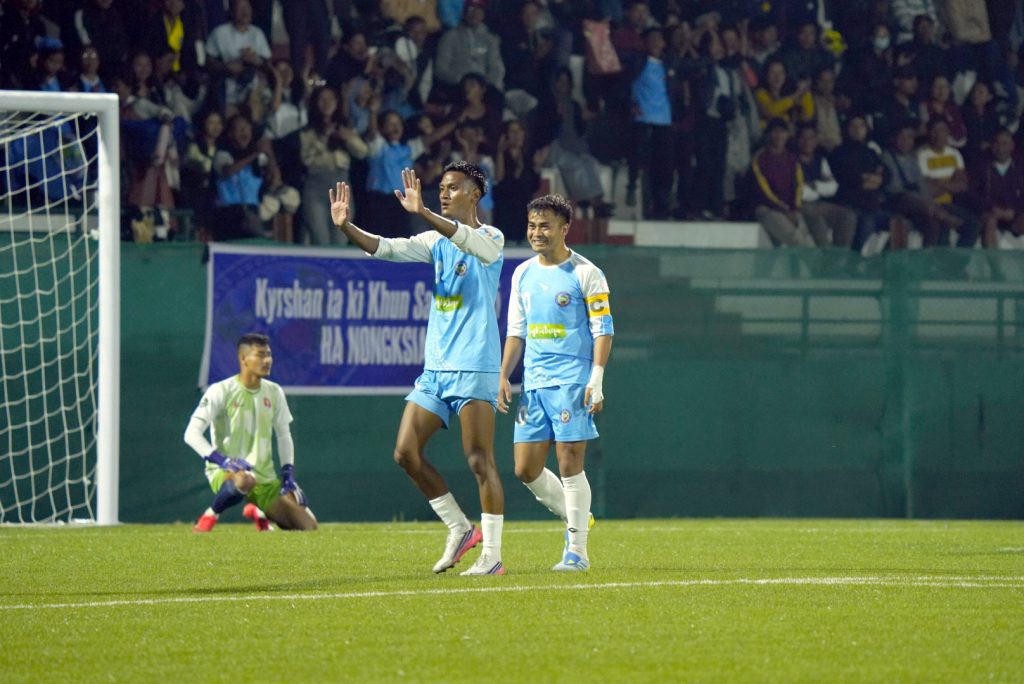
The new forwards have given the team a sharper edge, the bench appears to offer more options, and the willingness to shoot from distance suggests an attacking approach that is becoming less predictable. Most importantly, Nongkseh looked more prepared to adapt to the demands of the competition than they sometimes did during the earlier stages of their season.
The challenge now is to carry that momentum into their remaining fixtures. One convincing win does not guarantee further success, but it can provide the confidence and belief needed to build a campaign.
Nongkseh have made a promising start. They now need to show that the performance against Kuppuraj was not an isolated display, but evidence of a team that is growing into its potential.
The signs are encouraging. The next step is consistency.